Pain is almost inevitable in combat sports and Ghent University alumnus Ashkan Joshghani (33) knows this all too well. A sports injury resulted in an innovation that extends far beyond the mat. It is known as Exoligamentz.
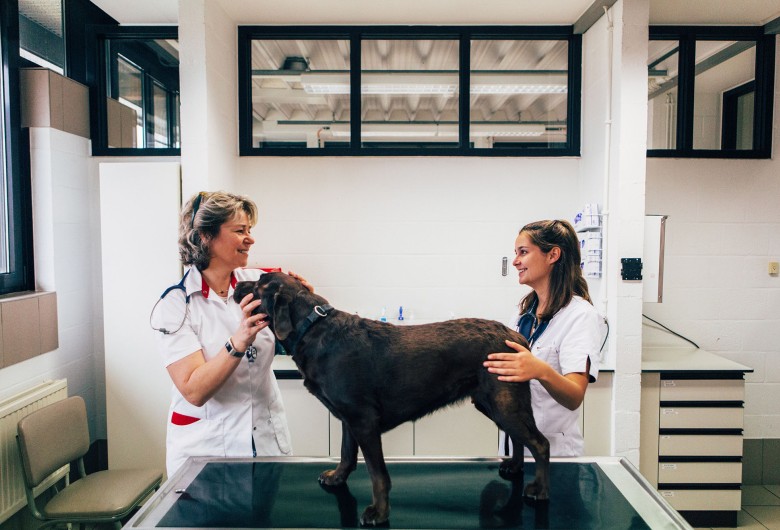
Six months ago, Anja Peumans made the decision: she changed her will so that part of her inheritance would go to the Ghent University Animal Clinic. “I felt like a weight had been lifted from my shoulders. Finally, I thought, I can fulfil my dream after I am gone”.
Artificial reproduction methods, such as IVF and ICSI, have already been successfully applied in humans. But this has not been the case for many domestic animals. In horses, for instance, it has seemed to be an impossible task for a long time to fertilise the eggs outside the body. Until Ann Van Soom and her team started focusing on it.
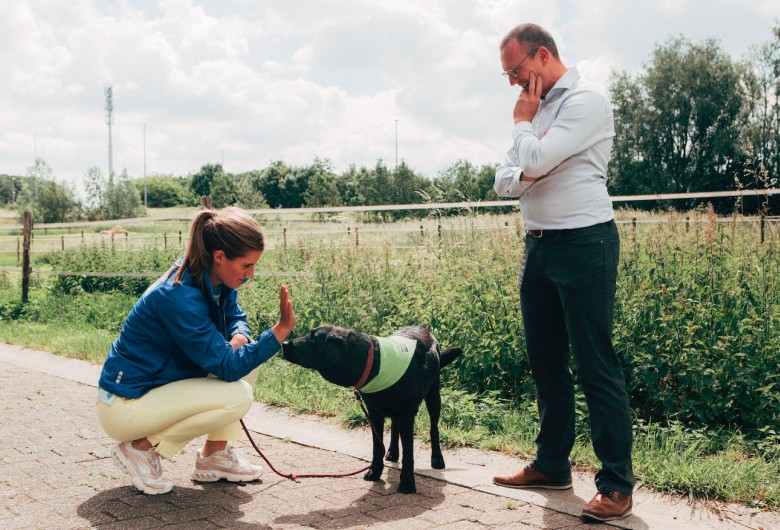
Only forty per cent of assistance dogs in training actually end up becoming a proper assistance dog. This problem not only causes long waiting lists, it also costs a lot of money. A collaboration, in the form of a professorship between professor Bart Broeckx and the non-profit organisation Purpose Dogs aims to find a solution.
While we humans tend to enjoy the hot summer days, it can often be hell for our dogs and cats. What’s the best way to keep those furry friends nice and cool? Common sense will get you a long way, says professor Sylvie Daminet, chair of the Department of Small Pets.
He has played an incredibly important role in fighting the corona pandemic and Steven Van Gucht can now claim the title of the very first ‘Ghent University alumnus of the year’.
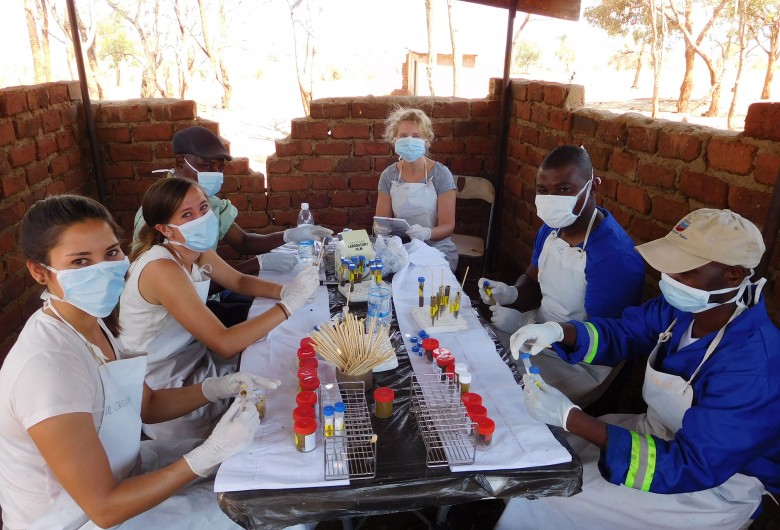
Cysticercosis is a little-known disease, which can lead to epilepsy and much worse. Annually, it causes the death of 28,000 people. Particularly in Africa, although it is discovered here too on some occasions. Pork tapeworm is the culprit. Professor Sarah Gabriël and her team are tackling this tapeworm and the havoc it causes. “However, everything depends on the governments’ resources and priorities.”
For the fifth consecutive year, the Faculty of Veterinary Medicine at Ghent University has come first in the Shanghai ranking. This ranks faculties based on their scientific research. However, what does it mean to be number one? And why do we deserve such a good score?
Assisted reproduction in horses is puzzling scientists. For some unknown reason, the easiest and fastest way, in vitro fertilization (IVF), does not work in horses. That there is an alternative is largely due to the pioneering work of Professor Katrin Hinrichs, who has been awarded an honorary doctorate by Ghent University.
Will we soon have dogs sniffing us out en masse in the fight against coronavirus? It’s possible, as tracker dogs appear to be more accurate in detecting coronavirus than traditional tests. Moreover, it is faster and a lot cheaper. “The first results from our corona dogs are very good,” says Ghent University researcher Chris Callewaert. “They achieve an average accuracy of 95 per cent.”
Many dog owners regard their favourite four-footed companion as a member of the family. But we don’t always speak the same language as our dogs. Vet and behaviour specialist Tiny De Keuster, who has been a guest professor at Ghent University for ten years, separates the facts from the fiction.
Why do we almost always receive vaccines via injection? Wouldn’t a pill be much easier? It would of course, but creating an oral vaccine is anything but easy. Ground-breaking research by Professor Eric Cox and Professor Bert Devriendt (Faculty of Veterinary Medicine) may well change this.