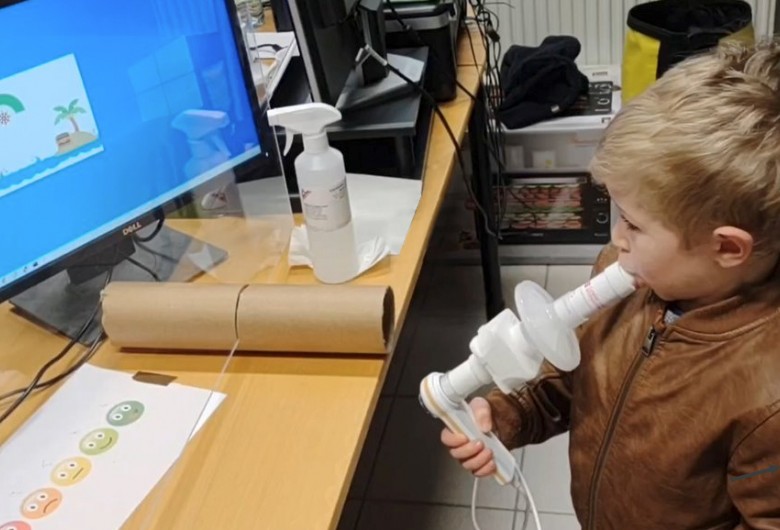
A corona test that’s as quick and easy as an alcohol breathalyser: it will soon be possible. Researchers at imec-MICT-UGent have been involved in creating a user-friendly device that should be ready for use by the summer.

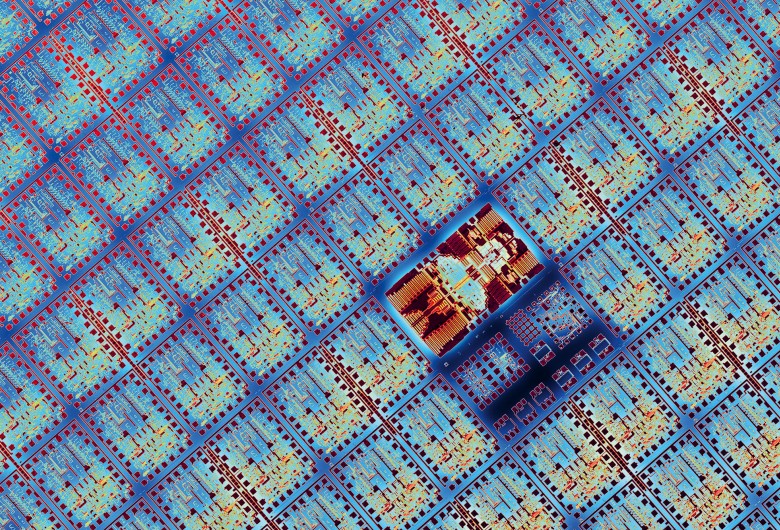
As the climate changes we must increasingly account for heavy rainfall and the flooding this causes. Having said that, there is already lots of data available to predict future flooding and potential damage. Yet our approach is not always aligned with this data.
The medical field is on the verge of a revolution, all thanks to... light. Medical devices will soon become so small and inexpensive that they will become part of everyday equipment. The driving force behind this technological revolution is photonics. ‘It is the fastest growing ‘‘enabling” technology we know’, says Roel Baets, head of the Photonics Research Group.
Imagine that bar service is allowed again and you can choose between two different drinks counters at a festival. One has orderly lines marked with posts, the other is entirely at random. Which option should you choose in order to get your drink fastest?
No, it’s not futuristic fiction: a contact lens with technology that imitates the effect of the human iris. It’s a hi-tech accomplishment that Ghent University and imec will now market: the spin-off Azalea Vision will continue developing and commercialising the contact lens.
It is fair to say that Sir Tim Berners-Lee changed the world when he invented the World Wide Web 32 years ago. And his work is far from finished, because he wants a mid-course correction on the web. An absolute necessity, as he himself says, on which he is working together with Ruben Verborgh from Ghent University, among others.
Epilog, a spin-off company from Ghent University, is rapidly becoming a global player in localizing certain disorders in our brains. They have already shown their worth in the treatment of epilepsy, and the techniques look promising when it comes to identifying dementia and sleeping problems.
Yannick Christiaens is educational supervisor at the Department of Industrial Systems Engineering and Product Design. He takes us to the product development studio at Campus Kortrijk.
Large companies know more about us than our own mothers. The massive gathering, storing and use of our online data has become commonplace, to such an extent that we have lost control of that data. The Solid project wants to change that. Its ambition? Reform the World Wide Web.
A real gem, that's what the library of the Faculty of Architecture and Engineering is. Of course, it was also designed by two of the most promising architects in Belgium today: David Van Severen en Kersten Geers, two Ghent University alumni.
Is the door about to slam on the millions of viewers who download their favourite box sets illegally? In his master's thesis in Computer Sciences, Hannes Mareen has worked out a way to thwart digital piracy.