
Can I post this online? Five tips to safely share your children’s holiday photos

Adorable baby photos, your toddler's first day of school or this summer’s holiday pictures with the children. Parents love to share photos of their children. But sharing those photos online is not without risk. Doctoral researcher Elisabeth Van den Abeele offers tips for parents on how best to go about it.
Most skin cancers can be prevented: protect yourself from UV with these 4 tips

Sunshine and holidays equal a tanned skin for many. But we need to adjust our ideas about tanning, according to dermatologists Lieve Brochez and Isabelle Hoorens. Our behavior towards the sun and UV will cause more and more cases of skin cancer in the coming years.
Ghent University researchers support Olympic track cyclists: optimal performance thanks to sensors and AI

If the Belgian track cyclists win a medal at the upcoming Olympic Games, it will not only be the result of top performances but also of top research. In the Flemish Cycling Centre Eddy Merckx, a stone's throw from the Watersportbaan, a group of researchers from the IDLab of UGent-imec supports our track cyclists with the help of artificial intelligence (AI).
Is music a drug?

Music connects us, moves us and, as recent research suggests, it can affect our brains in ways similar to psychoactive drugs. But how exactly does that work? And can music really be seen as a drug? Musicologist Edith Van Dyck investigated.

Professor Veronique Van Speybroeck is one of the world's leading researchers concerning sustainable technologies. For making groundbreaking contributions to the computer modelling of catalysis, she wins the prestigious Francqui Prize for Exact Sciences.
Editors' picks

Science vs Summer
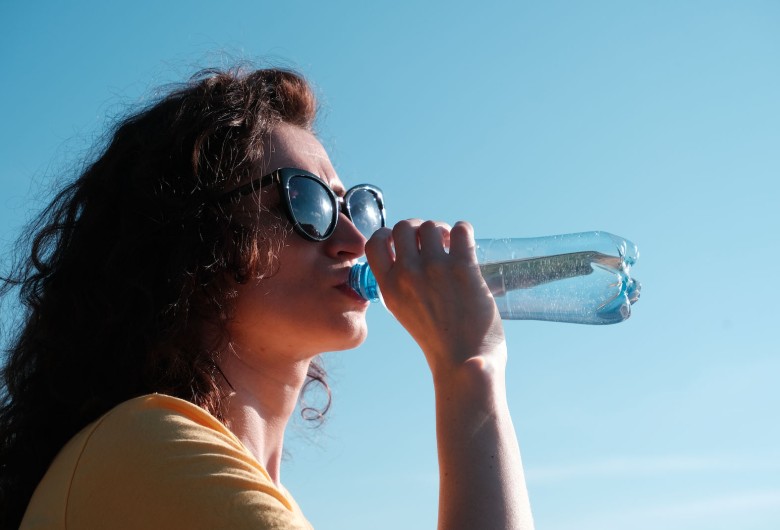
Weak, headache, thirsty? How do you prevent sunstroke?
“Stay out of the sun, avoid physical activity during the hottest time of day and have plenty to drink: with these three guidelines you will easily survive a hot sunny day and avoid sunstroke – or even worse: heatstroke”, says An De Sutter, head of general medicine (Faculty of Medicine and Health Sciences).

This is how to avoid parasites on holiday
Holidays! You're already looking forward to all the delicious things you'll eat while travelling, but wait ... Can you just eat anything? "There are some foods that you need to be a bit careful with.” Professor Sarah Gabriel tells us how to avoid taking an extra passenger back home
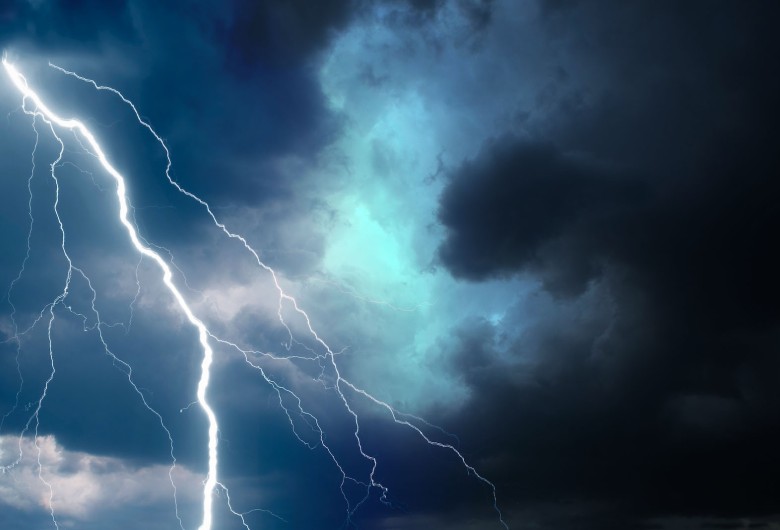
Will we have more summers with heavy storms and hail?
Are we likely to face a greater number of intense storms in the summer, due to climate change? Yet why does it rain harder when the temperature rises? That seems counter-intuitive, but not at all, says Steven Caluwaerts, climatologist at Ghent University and the KMI (Royal Meteorological Institute).
Ontdek meer
The world becomes a lot safer when we lock up fewer people
Imagine if we locked up fewer people, or if there were no longer any prisons at all. Would that lead to more crime or, on the contrary, produce greater equality and security? An intriguing issue criminologist Tom Vander Beken loves to ponder.

Alumnus Inge Bru coaches Paralympic athletes in Paris: "It's going to be intense!"
Good news for sports fanatics, the summer of sports is not over yet! Our Belgian athletes will soon be competing at the Paralympic Games. Alumna Inge Bru, specialist in physical medicine and rehabilitation at Ghent University Hospital, accompanies them in Paris.

Six tips for healthy screen time (for children & adolescents)
Our children are growing up in a world filled with screens. How much should we worry about this? Professor Mariek Vanden Abeele (imec-mict-UGent) analyses the benefits and drawbacks of digital connectedness among young people, and tells us how we can ensure healthy screen time.

Are classical languages still of any use?
With clock-like regularity the debate pops up about whether studying Greek and Latin is still useful. Some claim that classical languages are useless on the job market. For others, they are the foundation of our society. What should we think about that? We asked hellenist Evelien Bracke and got a nuanced answer.
