
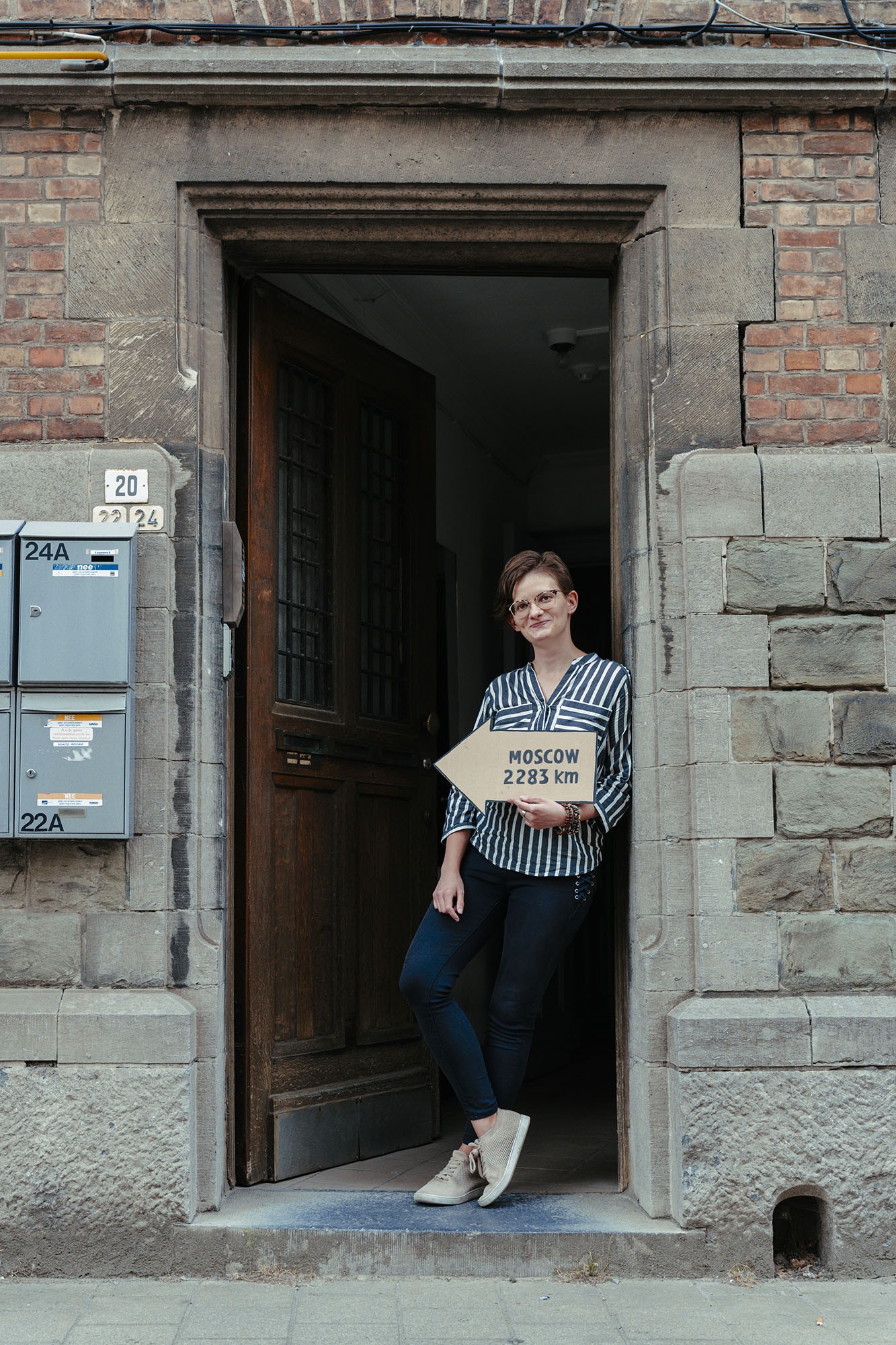
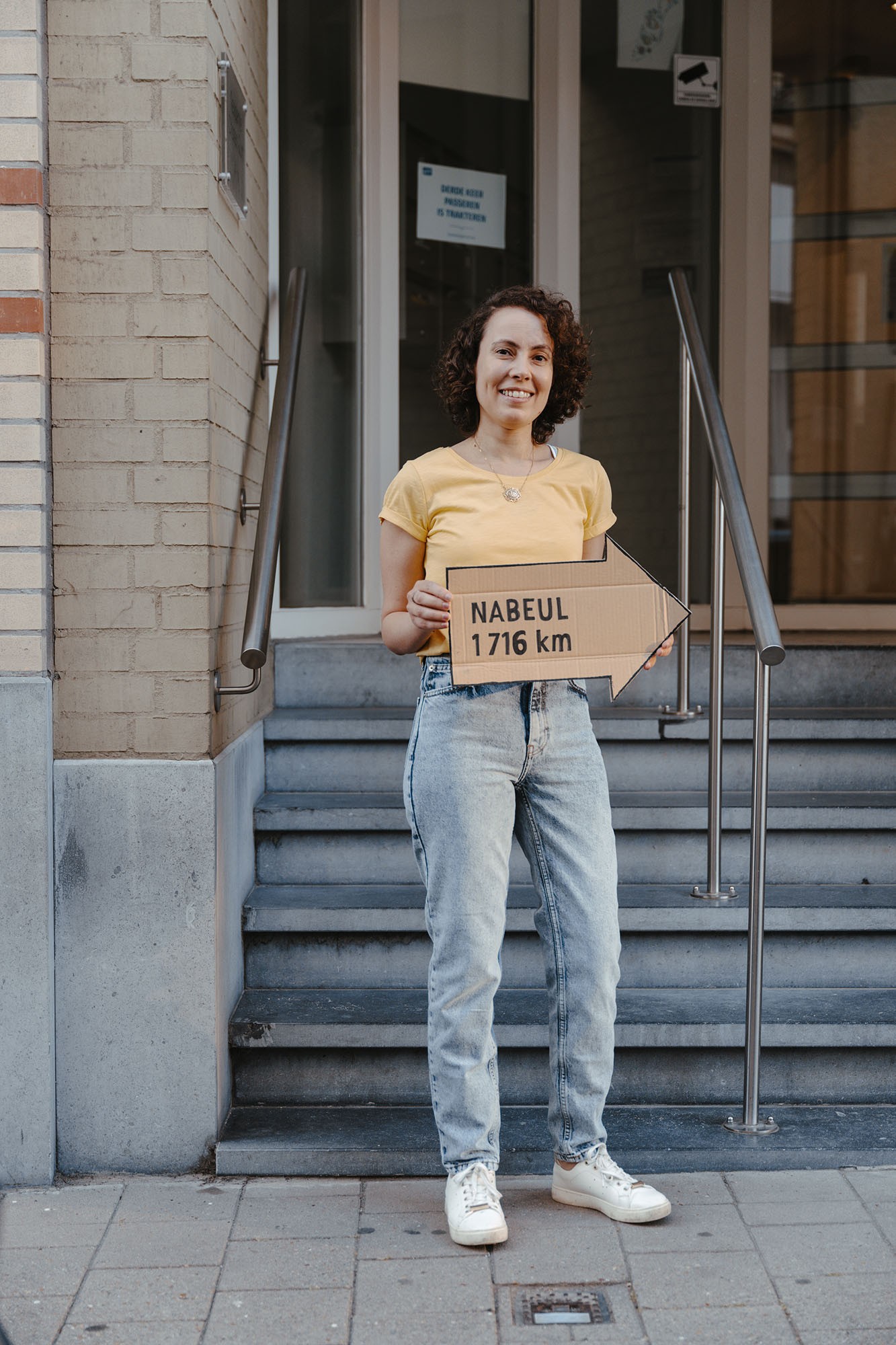
One is from Tunisia and is still getting used to the Belgians’ open mentality in the workplace. The other comes from Russia and can make no sense of all the unspoken rules. Both are researchers at Ghent University, and both have fallen in love with the city of Ghent. Safa Belghith and Ekaterina Longinova tell us about their experiences in Ghent.
They met via Teams. Where else? Not only because the corona virus is still affecting us for the moment, but also because Safa Belghith is recharging her batteries back home in Tunisia. “I’m working here for a while. It was months since I’d seen my family and I really missed them. The sun too. In fact, I think I might have missed that most of all.”
The sun in Moscow
“Yes!” exclaims Ekaterina Longinova. Her explosion of laughter says it all. “I didn’t even realise at first. But even though it can be very cold in Moscow, at least the sun shines there.” Safa Belghith joins in the laughter. “It was only after a while that I realised how grey the weather is here.”
Even so, it is not only her family and the sun that caused Safa to return to Tunisia for a while. In fact, travel is part of her job. She is researching human rights violations in transitional justice – the transition from a period of war or dictatorship to peace. Such as the transition that followed the Tunesian revolution in 2011.
Few opportunities as a researcher
“In fact, it was partly the aftereffects of that revolution, which caused me to look further afield for my academic career”, explains Safa. She ended up at Ghent University in the autumn of 2019. “Jobs are hard to find in Tunisia, let alone as a researcher, and funding is simply not available. Furthermore, I found a topic in Ghent University that was right up my street.”
“That sounds familiar”, responds Ekaterina. She came to Belgium as a master degree student. “For me, the political situation and lack of funding were two important reasons to go out into the international academic world. Although I was also just curious to experience studying and working abroad.” She is currently doing research into artificial intelligence. “I applied for a number of doctoral positions: at universities in central Europe and the United Kingdom. Ultimately I chose the most interesting research topic. And there was an immediate click with my promotor.”
Too open or not open enough?
Despite the fact she loves working with her colleagues, Ekaterina needed to get used to all kinds of unfamiliar customs. “It’s incredible how many implicit rules you have”, she says. “I find it a real challenge to get to the bottom of them, to say the least. For example, in Russia a student’s grade can be changed after a feedback session. If you want to do that here, you need to follow a strict procedure. Furthermore, it’s rarely done, as I have discovered for myself. In Russia, the rules are much clearer, and people’s communication is much more direct.”
“Oh no, for me it’s exactly the opposite. Belgians are far more open than Tunisians”, laughs Safa. “That took some getting used to. I find it really refreshing to receive feedback about the content of my work, rather than on how I am dressed, to give you just one example.”
In love with Ghent
Whether or not they had to adapt to the local mentality, they are both equally delighted to be here. Although they are unsure how their future will evolve once their doctorates are complete. Safa: ”Of course, much depends on the positions that are available at the university when the time comes, for example, as postdoctoral researcher. I am also interested in a job at an NGO.” Ekaterina: “The same applies to me. As much as I’d love to do a post doctorate, I’m also quite sure I would find the business world fulfilling. Certainly in my domain.”
One thing’s for sure, however uncertain the future may be, they are not yet fed up with Ghent. “The architecture, it’s so amazing”, according to Ekaterina. “And the Gravensteen, what a fantastic building that is,” continues Safa. “I always assumed I would end up in Brussels after a while, because of the language. But now I’m really not so sure. I never want to leave here.” She hesitates before continuing. “Well not yet, anyway.”
Ekaterina Longinova is PHD Student in the department of Marketing, Innovation and Organization at the Faculty of Economics and Business Administration. She loves the Medieval ambiance in Ghent.
Safa Belghith is PhD Student at the Centre for Human Rights at the Faculty of Law and Criminology. She is crazy about all the places where she can buy Belgian Waffles.
Read also
"Tinkering with crazy solutions for complex societal problems, without complex jargon"
“Knowledge is important. But we tend to get hung up in that part of the process sometimes,” says researcher Bas Baccarne (research group imec-MICT-Ghent University, in De Krook). He prefers it when thinking also leads to doing. Preferably together with a whole bunch of other stakeholders. And, if it’s up to him, in the stimulating environment of ‘Comon’.

Meet the hills of Ghent
From the Sint-Kwintensberg over the Sint-Pietersnieuwstraat to the Plateau: we take you over some of the most famous (and trickiest) slopes around Ghent University campuses.

"My colleagues are from all corners of the world"
She came here two years ago, and immediately developed a close connection with both the city and the university. He has now been living here for about ten years and feels completely at home. Both are pursuing their careers in the academic world, and that can sometimes be uncertain. The story of Gretel Mejía Bonifazi from Guatemala and Igor Fijalkowski from Poland, two international members of Ghent University.

PlastiCity helps to recycle the mountain of waste in the city
Urban companies are struggling to deal with their plastic waste. The PlastiCity project, which spans four countries, is looking for practical solutions to send their recycling percentage sky high. Ghent University engineer Gianni Vyncke is involved. “The aim is to recycle plastic into sustainable products for the city.”
