TV show Het verhaal van Vlaanderen was certain: the box just unearthed from the City of Ghent's heritage depot contained the remains of the one and only Judith, the progenitor of the Counts of Flanders. But was that really true? Historian Steven Vanderputten and bio-antropologist Isabelle De Groote unleashed all their scientific knowledge and research methods on that hypothesis.
Previously...

In 2009, the City of Ghent began the redevelopment of St. Peter's Square. The then-city's Archaeology Department was given ample opportunity to conduct excavations on the square beforehand. Skeletal remains of seven individuals were found just outside the entrance to the current abbey church. The skeletal remains were examined and then placed in a box. Fifteen years later, this box was featured in the "Verhaal van Vlaanderen" (Story of Flanders) because it possibly contained the remains of Judith, the first Countess of Flanders. Tom Waes's question about whether it was Judith or not set the scientific ball rolling...
Steven, you're standing in the City of Ghent's heritage depot, next to some skeletal remains, and the tv host asks, "Is this Judith?" and you answer...?
Steven Vanderputten: "I don't know". (laughs)
"And we didn't know either; much more research was needed. Since 2009, when it was first suggested that one of the human remains might be Judith's, a great deal has changed in archaeological, historical, and bioanthropological research. After that recording, the idea arose in me to take on the challenge together with a multidisciplinary group of researchers. They could all contribute essential building blocks: new techniques, new questions, and also advances in scientific insights."
Isabelle De Groote: "At the end of 2019, I came to Ghent University and started the ArcheOs lab for biological anthropology – now a member of the GASC core facility. When Steven asked me, Jessica Palmer, a postdoc in anthropology, and I went to the Black Box and were shown the box. Inside, among other things, was S127, the potential Judith. At the time, I couldn't have known how intensive this "little project" would become, but we found it a tremendously interesting question.”

And then the real work began.
Steven: “Before Isabelle and her team could begin their analyses, they needed a profile of the person they were looking for. This profile is based on historical sources. As a historian, I can't simply open a book and list a few facts about Judith. No, I have to systematically search for those historical sources, review them, and verify their authenticity.”
Isabelle: “It was an iterative process. We compared Steven's findings with what we saw in the skeleton. This raised a whole new set of questions, such as: where did this person live, what did she eat, was she breastfed as a child, did she wear shoes… All these questions we took back to the historians.”
Steven: “And that is a lot harder to verify than you might think, because there aren't that many sources from that time and their interpretation is often quite challenging.”

History and bioanthropology fall under the same faculty (Arts and Philosophy), but they are two very different disciplines. What did that mean for the research?
Steven: “Bioanthropologists speak a completely different language than historians. Our methodologies and discourse are completely different.”
Isabelle: “Yesterday we had a discussion about the word "important." Steven says that S127 was an important person. Based on historical sources, we can indeed deduce that only people of high social status were allowed to be buried there. But I'll never be able to say whether someone was important. We don't have that word in our country. We can, however, say whether someone had a diet consistent with that of the medieval elite. For me, important is something social, not biological.”
Steven: “And yet, we're not contradicting each other. It simply demonstrates that different disciplines reach conclusions differently. Finding the right way to engage in dialogue was also a learning process.”
And now people can experience this entire process through an exhibition at St. Peter's Abbey. Will they find out there whether we've finally found Judith?
Steven: “We'll keep that to ourselves for now. (smiles) For me personally, that wasn't the most important question either. Discovering how that multidisciplinary research could work and how much more we could discover, even compared to the original research from 15 years ago, that was my primary motivation. For example, we now know a lot more about Ghent in that period, the site and its surroundings, how people lived back then, burial customs...”
Isabelle: “We almost never conduct research on an individual like this. We usually work at the population level, with larger groups. So, this was a very unique project for us, and I was very curious to see how far we could get."

Now, you'll never hear me say that any hypothesis is true. You never know unless there's a plaque with a name engraved on the skeleton. And even then. In this case, we did try, based on what we found in the literature and what we observed on the skull, to create a facial reconstruction. We ended up with nine versions, all with different hair, eye, and skin colors.
Steven: "Exhibitions often present the results of research, but nothing is said about the process leading up to it. Yet that's precisely what's very interesting for the visitor. The research is a story in itself, and that certainly deserves to be told."
Isabelle: "In this exhibition, we take the public through the process. We present our findings and let them be scientists for a moment."
And after the exhibition the skeleton goes back in the box, and that's it?
Isabelle: “Today we have to strike a balance. Some results are inconclusive, but we know we can't keep cutting corners. The samples we collected are now going into the freezer, literally, until we have new analysis methods. Only half of the S127 skeleton has been preserved, so the material is final. The role of heritage repositories in preserving skeletal material is crucial in this.”
Steven: “They are indeed indispensable. We really must preserve our heritage with the necessary care, so that future generations can also study it. They will undoubtedly do so using different, more refined methods. I have no doubt that new things will emerge within ten or twenty years. And so we can continually explore new, previously inaccessible aspects of the past. I think that's fantastic.”
Professor Steven Vanderputten is a historian in the History Department of the Faculty of Arts and Philosophy. His research focuses on the development of religious communities, political culture, and social structures in the Early and High Middle Ages.
Professor Isabelle De Groote is a bioanthropologist affiliated with the Archaeology Department of the same faculty. She researches human evolution, with a specific focus on modern human diversity, the origins, evolution, and disappearance of Neanderthals.
The exhibition is a collaboration between Historical Houses Ghent, the Faculty of Arts and Philosophy of Ghent University, the Henri Pirenne Institute for Medieval Studies, the ArcheOs Laboratory for Biological Anthropology, and the Department of Urban Archaeology and Monument Preservation of the City of Ghent. The project was supported by the Societal Value Creation Fund of Ghent University.
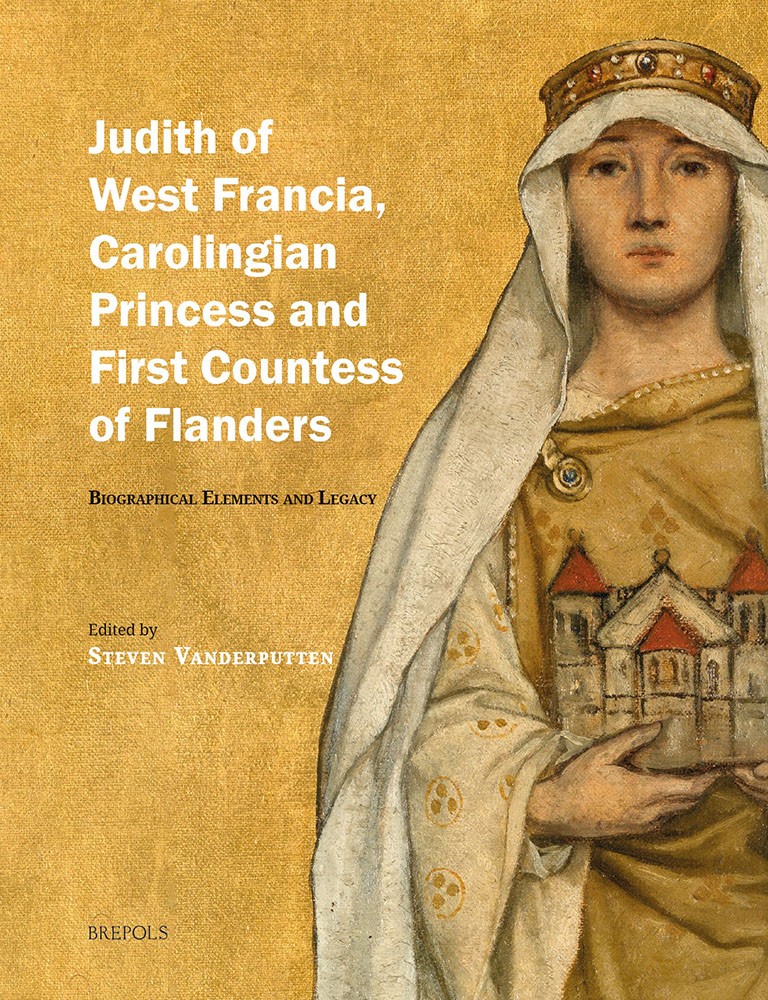
A total of 17 researchers contributed to the project. The principal investigators are: Prof. Dr. Steven Vanderputten and Dr. Stefan Meysman (Department of History, Ghent University), Prof. Dr. Isabelle De Groote and Dr. Jessica Palmer (Department of Archaeology, Ghent University), and Geert Vermeiren and Marie-Anne Bru (City of Ghent). Full details of their findings can be found in the scholarly publication "Judith of West Francia, Carolingian Princess and First Countess of Flanders," edited by Steven Vanderputten.
Read also
From boxed-in thinking to no man’s land: new GUM exhibition questions the borders we live by
Borders are everywhere. In its new exhibition BORDERS, the Ghent University Museum (GUM) & Botanical Garden dissects the concept in all its forms: from biological membranes to bureaucratic walls and mental scars. By matching objects from its rich academic collections with contemporary art, the exhibition reveals borders not as fixed facts, but as ongoing negotiations experienced differently by each of us.

Bashir Abdi receives honorary doctorate: “This shows how powerful sport is"
For his unique combination of athletic excellence and social commitment, including his work supporting vulnerable young people in Ghent, Abdi is being awarded an honorary doctorate from Ghent University. “You don’t need an Olympic achievement to help others.”

Three new Stolpersteine in Ghent: the tragic story of Rifca, Valère and Falks
Around thirty Stolpersteine can be found in the sidewalks across Ghent. On November 5th, three more were added for Ghent University victims Valère, Falks, and Rifca.

From research to impact: how technology transfer works at Ghent University
Ghent University not only attracts researchers and students, businesses also like to establish a presence near the university. Excellent research, know-how and highly trained professionals constitute the ideal breeding ground for innovation.
