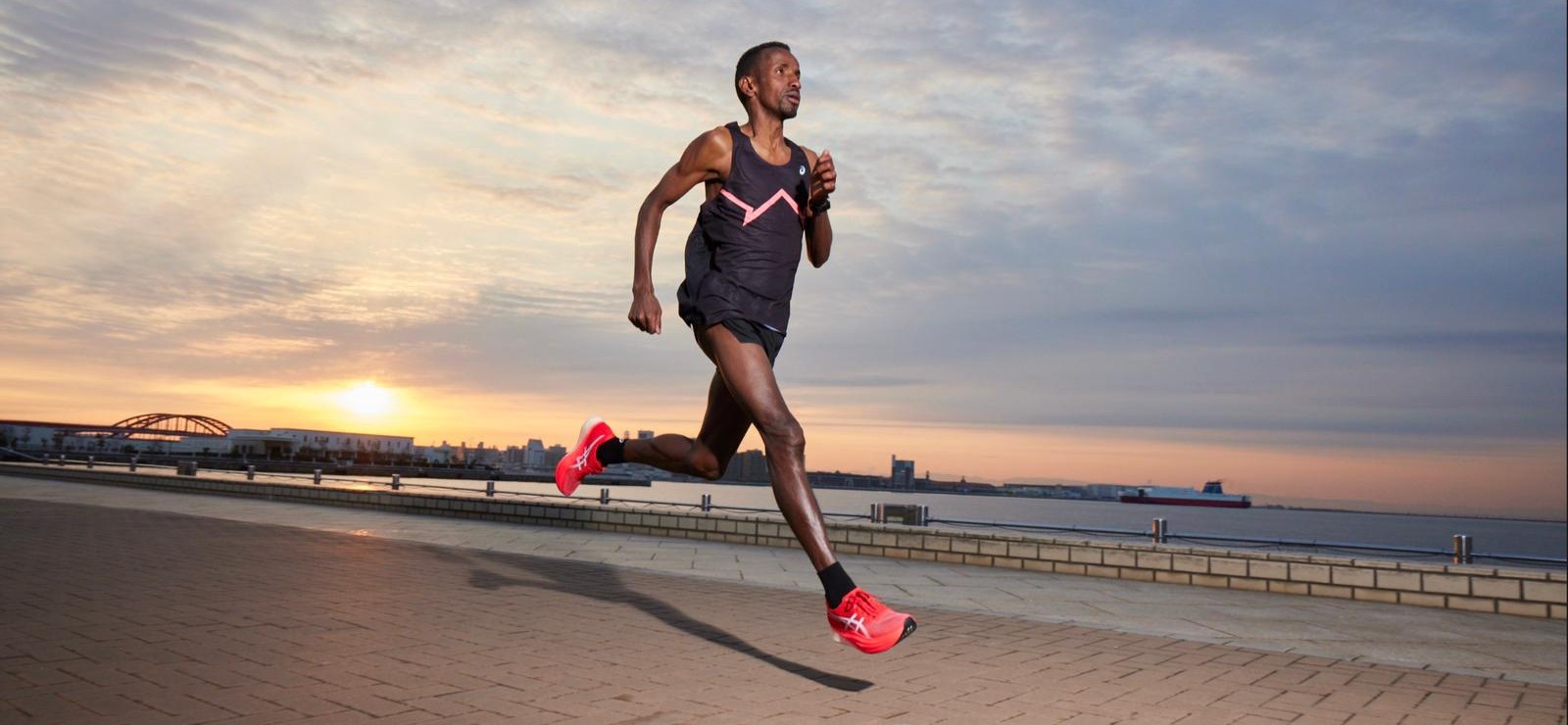
Winning Olympic bronze and silver medals in the marathon has already secured Bashir Abdi a place in the history books. But it is everything he does beyond elite sport that makes him just as remarkable. For his unique combination of athletic excellence and social commitment, including his work supporting vulnerable young people in Ghent, Abdi is being awarded an honorary doctorate from Ghent University. “You don’t need an Olympic achievement to help others.”
Like every spring, Bashir Abdi is spending time training at altitude in the mountains of Ethiopia. Between sessions, the Olympian makes time for our interview. He admits he couldn’t sleep for several nights after Vice-Rector Herwig Reynaert called to ask whether he would accept the honorary doctorate. “I nearly fell off the mountain,” he laughs. “I don’t do anything special. I just do what I love: running. The fact that this inspires or helps people, shows how powerful sport can be.”
Does this feel different from winning an Olympic medal?
“For an athlete, an Olympic medal is the highest achievement you can reach. For an academic, I imagine that would be an honorary doctorate. So receiving this really feels like the best of both worlds: an Olympic medal at an academic level. It’s a huge honour.”
You’ve often said that Ghent has truly become your home over the years. What does the city mean to you?
“For me, Ghent is the place where my life truly began. I was lucky to end up here. The city embraces every colour and every difference. Without the people of this city, I wouldn’t be where I am today. That’s what makes recognition from Ghent University so special. Even if it came from Oxford or Cambridge, it wouldn’t feel as meaningful.”
You arrived in Ghent in 2002, after fleeing the civil war in Somalia. You were only 13 years old at the time. Did sport help you find your place here?
“The culture shock was enormous. I didn’t speak a word of Dutch and I had never even seen white people before. Sport helped me settle in, make friends, and learn the language more quickly. Here in Ghent, I discovered athletics by chance when I joined my friend Bert Misplon and my brother Ibrahim to sport club Racing Ghent. When I ran, I felt truly free for the first time in my life. While running, it was just me and the sound of the birds. As a child, I had been through so much, and running felt like medicine.”

"We all have both the responsibility and the ability to help each other, each in our own way. You don’t need to deliver an Olympic performance to do that. On the contrary: kindness is free."
You co-founded the non-profit Sportaround, supporting vulnerable young people. How does sport make a difference for them?
“Sport is a universal language. It brings together people from the most diverse backgrounds. When I arrive at a square in Ghent with a cargo bike full of sports equipment, you often see young people staring each other down or even arguing. Then you take out a ball, and something magical happens. Suddenly they form a team. They communicate through the game and high-five each other. That genuinely makes me happy. Sport connects people, but it also builds self-confidence, respect, discipline, and perseverance.”
Where did the idea to set up a non-profit like that come from?
“For me, it was a very logical step. When I arrived in Belgium as a teenager, I quickly found the way to organisations such as vzw Jong. They organise accessible activities where you don’t have to worry about membership fees or sports equipment. Later, when I started achieving success as an athlete, I felt a responsibility to give something back to the society that had given me so many opportunities.”
You studied social work. Is caring for others simply part of who you are?
“My mother had a big heart for people who were struggling. I’m sad that she can’t see everything I’m doing today. And I know from my personal experience what it means to be helped. That good shouldn’t stop with me: what you receive, you should pass on. And when you do something good, you get so much in return.”
Ghent University invests in research on the social role of sport, including through the academic chair ‘The Future of Sport’. What’s your take on that?
“I was there when the academic chair was established in 2018. I still remember that evening well because it was so educational and inspiring. It’s an excellent initiative that brings together academics, organisations, and people from the field. When connecting academic knowledge with on-the-ground experience, you can truly make a difference, both for society and for athletes.”
What do you hope people will remember about you in the future?
“Not so much my medals, but the person I am. I can run well, but that doesn’t make me better than anyone else. We all have both the responsibility and the ability to help each other, each in our own way. You don’t need to deliver an Olympic performance to do that. On the contrary: kindness is free.”
The award ceremony for Bashir Abdi’s institutional honorary doctorate will take place on 8 March 2026 at approximately 11:15 a.m., during the running event Bashir’s Run at the Wouter Weylandt Stadium in Gentbrugge. Everyone is warmly invited to attend.
“Sport connects. Sport motivates. Sport helps you go beyond your limits.”
Rector Petra De Sutter and Vice-Rector Herwig Reynaert are proud to welcome Bashir Abdi as an honorary doctor of Ghent University. “The values he exemplifies — inclusion, social engagement, and the pursuit of excellence — are also those of Ghent University.”
Read also
From boxed-in thinking to no man’s land: new GUM exhibition questions the borders we live by
Borders are everywhere. In its new exhibition BORDERS, the Ghent University Museum (GUM) & Botanical Garden dissects the concept in all its forms: from biological membranes to bureaucratic walls and mental scars. By matching objects from its rich academic collections with contemporary art, the exhibition reveals borders not as fixed facts, but as ongoing negotiations experienced differently by each of us.

Five (realistic) ways to move more in 2026
January often starts with good intentions… but those plans can be quickly abandoned. To exercise more is always high up everyone’s list, but there’s often a gap between wanting to do it and actually doing it. So how do you bridge that gap?

Three new Stolpersteine in Ghent: the tragic story of Rifca, Valère and Falks
Around thirty Stolpersteine can be found in the sidewalks across Ghent. On November 5th, three more were added for Ghent University victims Valère, Falks, and Rifca.

Why sports apps can actually be demotivating
They are already well established in elite sports, but amateur athletes are also increasingly using technology to improve their sports performance or prevent injuries. Sports technology is everywhere it seems, but there are pitfalls.
