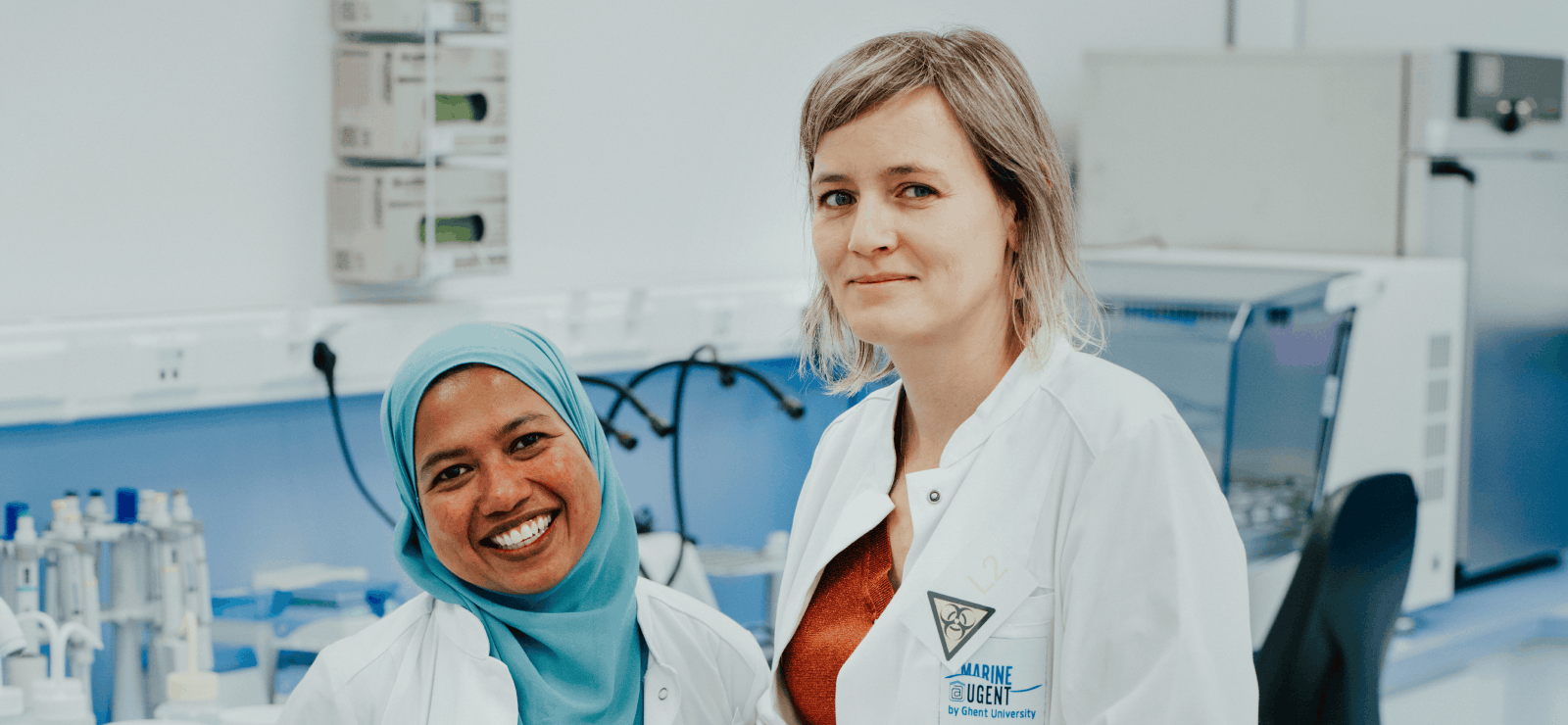
Professor and deep-sea ecologist Ellen Pape and PhD researcher Tina Agustina both work at Campus Ostend. As well as a campus, they share an interest in ecology and in the interplay between the sea and human activity.
Walk around Campus Ostend and you’ll feel like you’ve stepped into a small universe of companies, start-ups and research groups that all have something to do with the sea. Ellen is both a professor and a postdoctoral researcher at the Department of Biology (Faculty of Sciences). Tina is a PhD student at the Department of Animal Sciences and Aquatic Ecology (Faculty of Bioscience Engineering).
Life on the seabed
Ellen studies life on the deep-sea floor, which lies at a depth of at least 200 metres. Her research focuses on the impact of deep-sea mining for polymetallic nodules: mineral-rich nodules. Her main field site is the Clarion-Clipperton Zone in the Pacific Ocean, between Hawaii and Mexico.
The deep sea remains one of the least explored places on Earth. “Yes, we’ve already discovered new life,” she laughs. When she dives into the Clarion-Clipperton Zone, she doesn’t use a submarine like the ones in Jules Verne’s stories. Ellen: “Those do exist, but they’re rare and expensive. Instead, engineers pilot an uncrewed underwater robot from the ship, and a pre-programmed underwater robot flies over the seabed to take photos and scans.”
Precisely because research at such depths is so expensive, the seabed remains relatively unexplored. “That’s why deep-sea mining, if it ever goes ahead, would have to be managed very carefully. There will always be effects on the environment, but it’s important to have an idea of their scale and of possible mitigation measures. How much negative impact we find acceptable is not just a scientific question but a societal one too. It’s a highly controversial form of mining, precisely because we’re still very much in the process of working out the answers to those questions.”
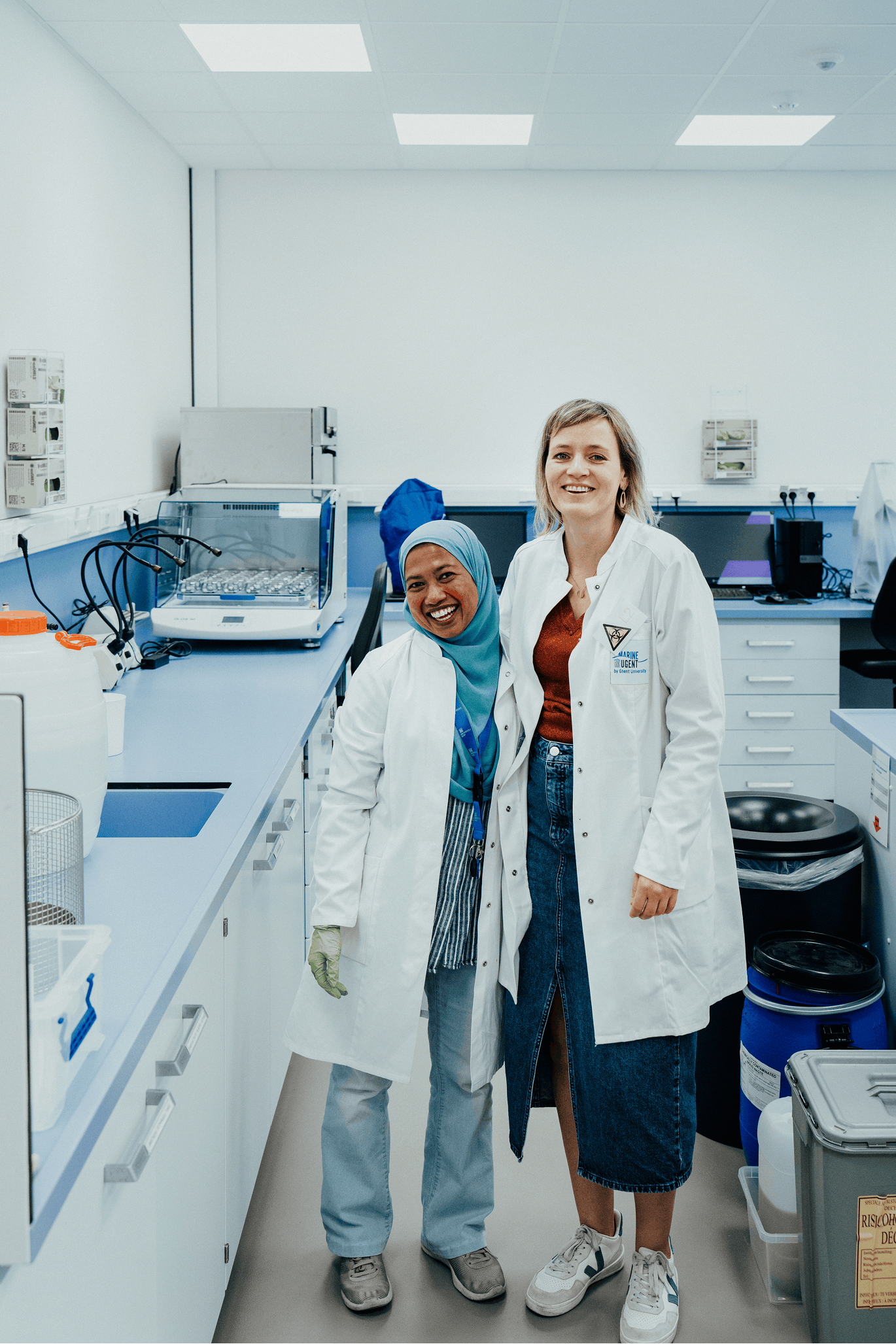
Ellen studies life on the deep-sea floor, which lies at a depth of at least 200 metres.
Fungi against pollution
Indonesia is an archipelago with one of the longest coastlines in the world, Tina explains. “You’ll find lots of ports, offshore structures and other man-made marine structures there. With my PhD research, I want to help reduce pollution there.”
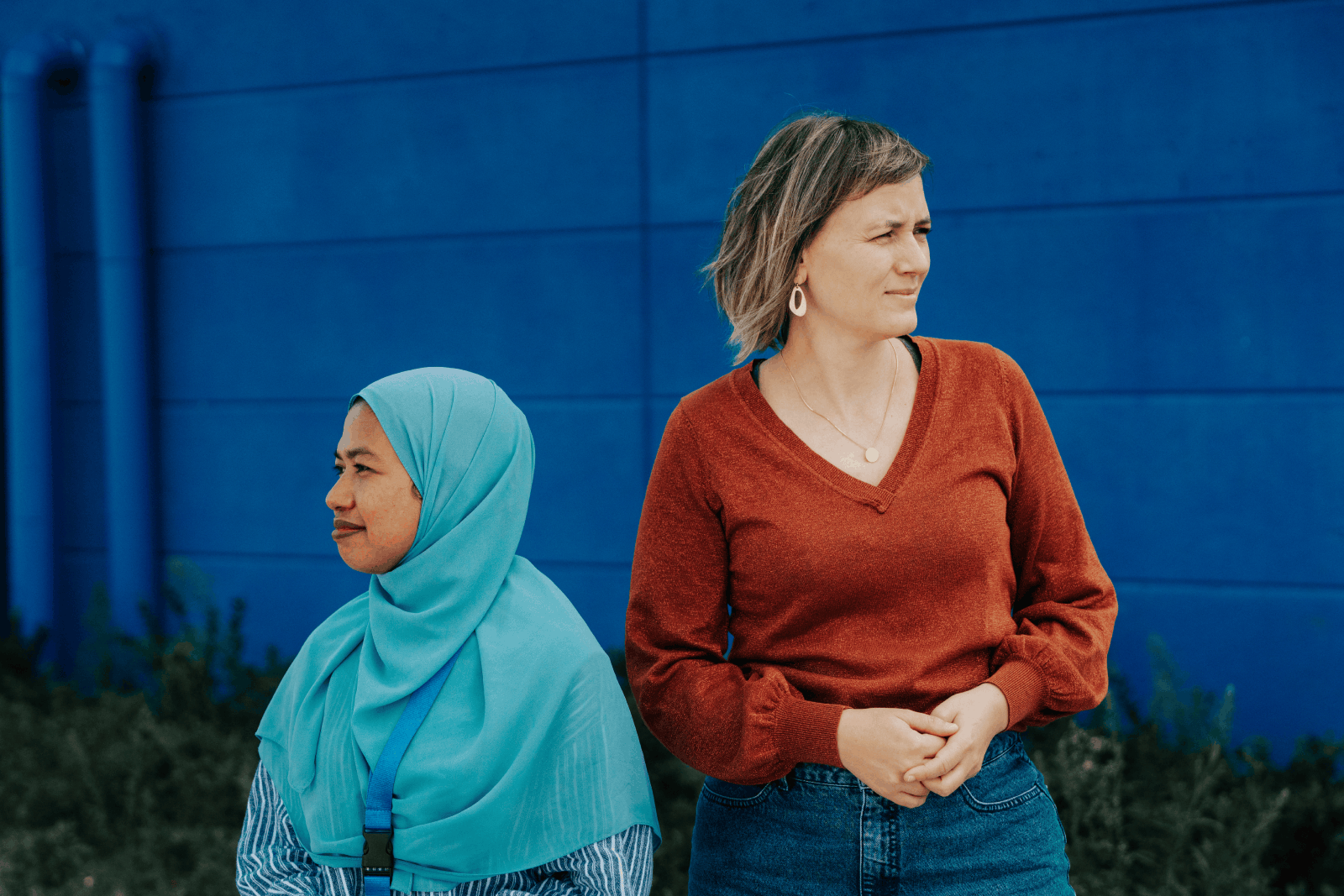
She is now starting the third year of her four-year PhD at Ghent University. She isolates fungi from seawater, sediment and marine organisms, looking for enzymes that could serve as an eco-friendly alternative to the toxic coatings on underwater structures and ship hulls. “I’m looking for a sustainable alternative based on marine fungi.”
Before starting her PhD, Tina was actively involved with local communities in Indonesia: “I worked with them on marine issues such as marine litter and heavy metal pollution.” That experience eventually brought her to Ghent University: “After that, I looked for a university and a professor doing research on that topic. That’s how I ended up with Professor Jana Asselman of Marine@UGent, here at Campus Ostend.”
A campus full of cross-pollination
Campus Ostend is the ideal habitat for this kind of research. Ellen compares the science park to the one in Zwijnaarde, where Ghent University’s Campus Ardoyen and Campus Eiland Zwijnaarde form a vibrant ecosystem of international R&D centres and high-tech growth companies working in biotechnology. Bluebridge, the building where Ellen and Tina work, acts as a kind of hub. “Alongside the Ghent University research groups, including the marine engineering wing where Tina is based, it’s also home to ten companies working in the blue economy.”
Every month there’s an informal networking event where companies and research groups present their work to each other. “It’s a great opportunity to meet people and learn from one another,” says Tina, “just like the more informal activities, such as the potluck we had here last week with everyone at Bluebridge.” Her own research group has around twenty members, plus international postdocs and exchange students.
Ellen: “Tina’s work is mainly in bioscience engineering, while I’m from the Faculty of Sciences. The interdisciplinary connection between faculties here on campus makes collaboration really valuable.”
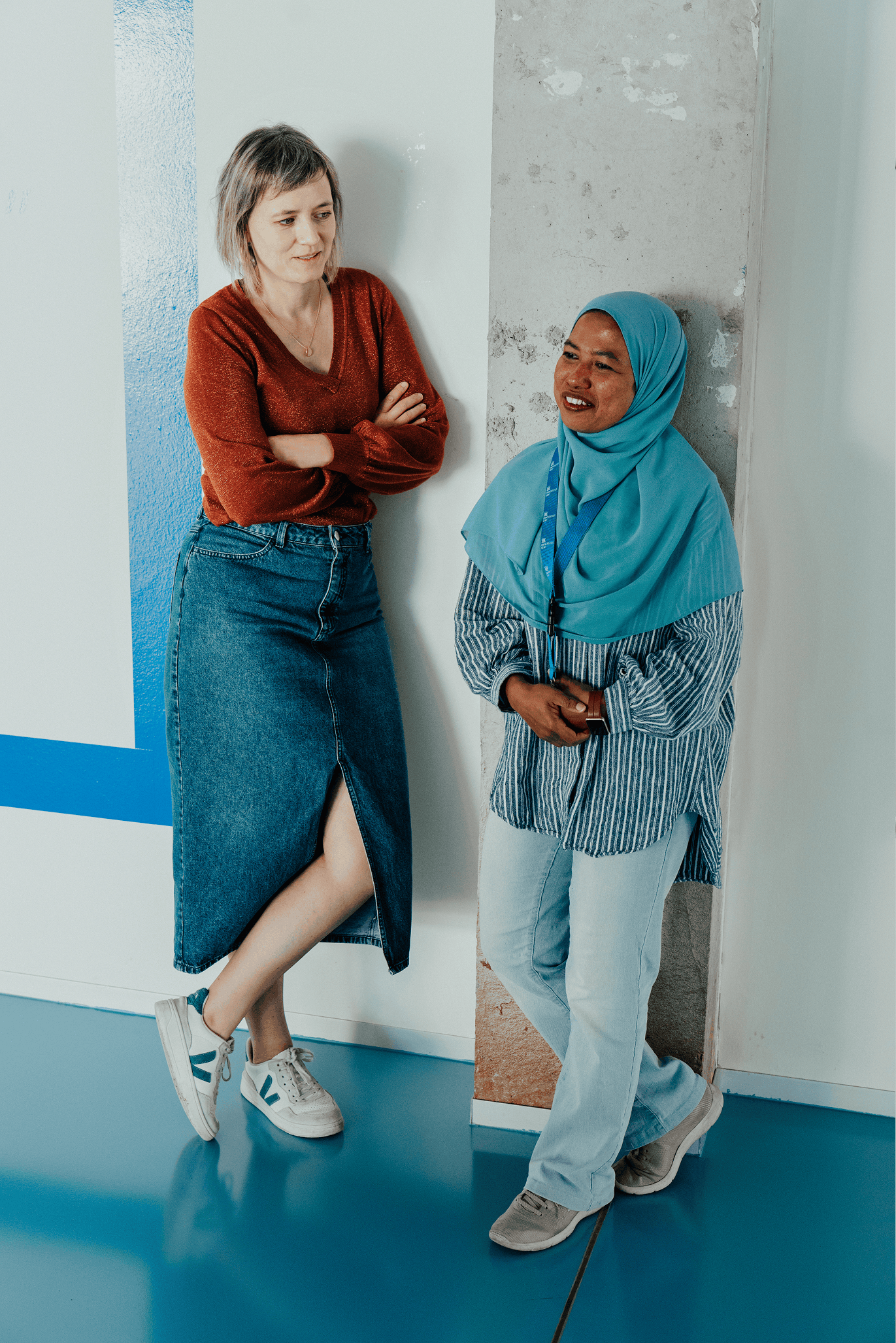
"The interdisciplinary connection between faculties here on campus makes collaboration really valuable."
A new academic year
Tina has an important PhD milestone ahead this academic year. “I’m working on my first paper, which I plan to submit by the end of this year. In the meantime, I’ll carry on purifying the enzymes in the lab.”
It’s going to be a busy academic year for Ellen too. “I’m organising the logistics for this autumn’s expedition to the Clarion-Clipperton Zone. I also supervise master’s students on the Oceans and Lakes programme and teach marine ecology. And as part of lifelong learning, I’m setting up a new course on using AI and machine learning to analyse environmental data and write project proposals.”
So there’s a busy year ahead. Luckily, from Campus Ostend they’re never far from the sea, where the breeze can clear their heads and they can enjoy our North Sea.
What tip would you give the Ghent University community for the coming academic year?
Tina: “Be yourself, in both academic and non-academic settings. Dare to discuss your ideas and challenges with your professors and colleagues, because everyone wants to help. Immerse yourself in local life and discover what nature, culture and everyday life in Belgium have to offer, especially in Ostend. It’s more than worth it!”
Ellen: “Enjoy the journey, not just the destination. As a researcher, invest in collaboration between departments and universities, because it makes every project richer. And everyone from our Ghent campuses is always welcome in Ostend to team up on new ocean research!”
Read also
TechTransfer: the springboard for scientific research
How do you ensure that scientific breakthroughs make their way into the real world? That is the mission of Ghent University’s TechTransfer Office. “We build communities, provide access to labs and offer support with business plans to give spin-offs a boost.”

Why Ghent University Imagines 2050 is a necessity, a puzzle and a flywheel
Ghent University (UGent) faces a historic transformation over the coming decades. UGent Verbeeldt 2050 (Ghent University Imagines 2050) will see campuses renovated, relocated and connected. Chief Logistics Officer Jeroen Vanden Berghe and policy advisor Tristan Verleyen share insights into the short- and longer-term plans. “It’s a strong vision for UGent’s future. And the path to get there? We’ll walk it together.”

Mara and Terry on Ghent University Global Campus: "Our students embody 'Dare to Think' in its purest form"
Since May, Mara Santi has been co-heading Ghent University Global Campus (GUGC) in South Korea. Together with student Terry Park, she looks ahead to a new academic year. A long-distance call about international connectivity, boundless ambition, and Korean culture.

How Campus Kortrijk Connects People and Technology
UGent Campus Kortrijk is gearing up for an academic year packed with creative ideas, sustainable innovation, and warm encounters. A joint interview on inclusive design and the power of diversity: “Cultural differences can actually bring people closer together.”
