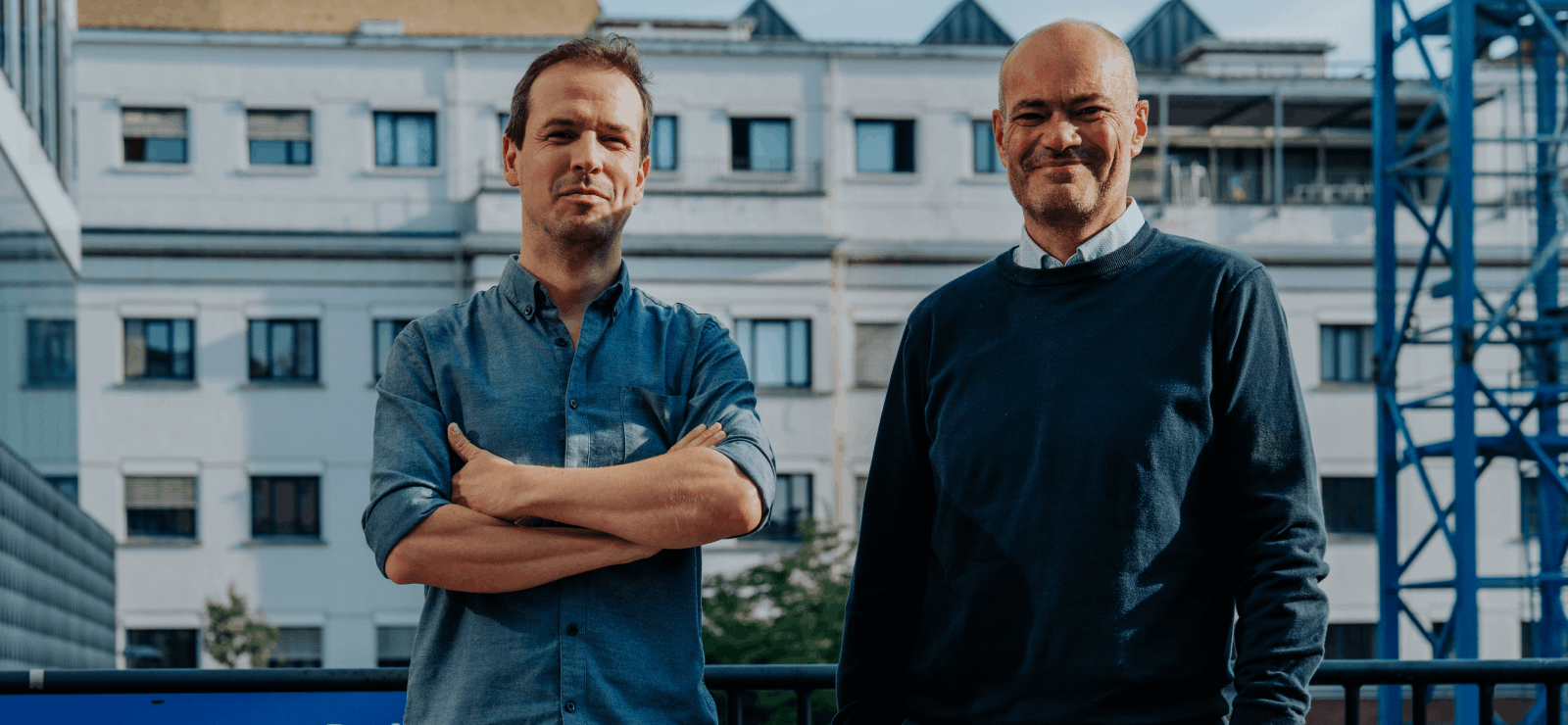
Ghent University (UGent) faces a historic transformation over the coming decades. UGent Verbeeldt 2050 (Ghent University Imagines 2050) will see campuses renovated, relocated and connected. Chief Logistics Officer Jeroen Vanden Berghe and policy advisor Tristan Verleyen share insights into the short- and longer-term plans. “It’s a strong vision for UGent’s future. And the path to get there? We’ll walk it together.”
The goal is ambitious: by 2050, UGent will house its 11 faculties in three campus clusters featuring more room for interaction, shared facilities and a sustainable, easily accessible campus environment.
Work is already well underway. Right outside Jeroen Vanden Berghe’s office window, the construction site for the new bicycle parking garage between the Ufo and the rectorate sets the tone. Over the next 25 years, UGent will be a work in progress. As Chief Logistics Officer, Jeroen oversees all university buildings and associated finances. “Buildings are so much more than just the places where teaching and research take place,” Jeroen says. “The focus is on who we’re doing it for and the vision of the future behind it, with an eye on societal challenges such as sustainability and climate-friendly mobility.”
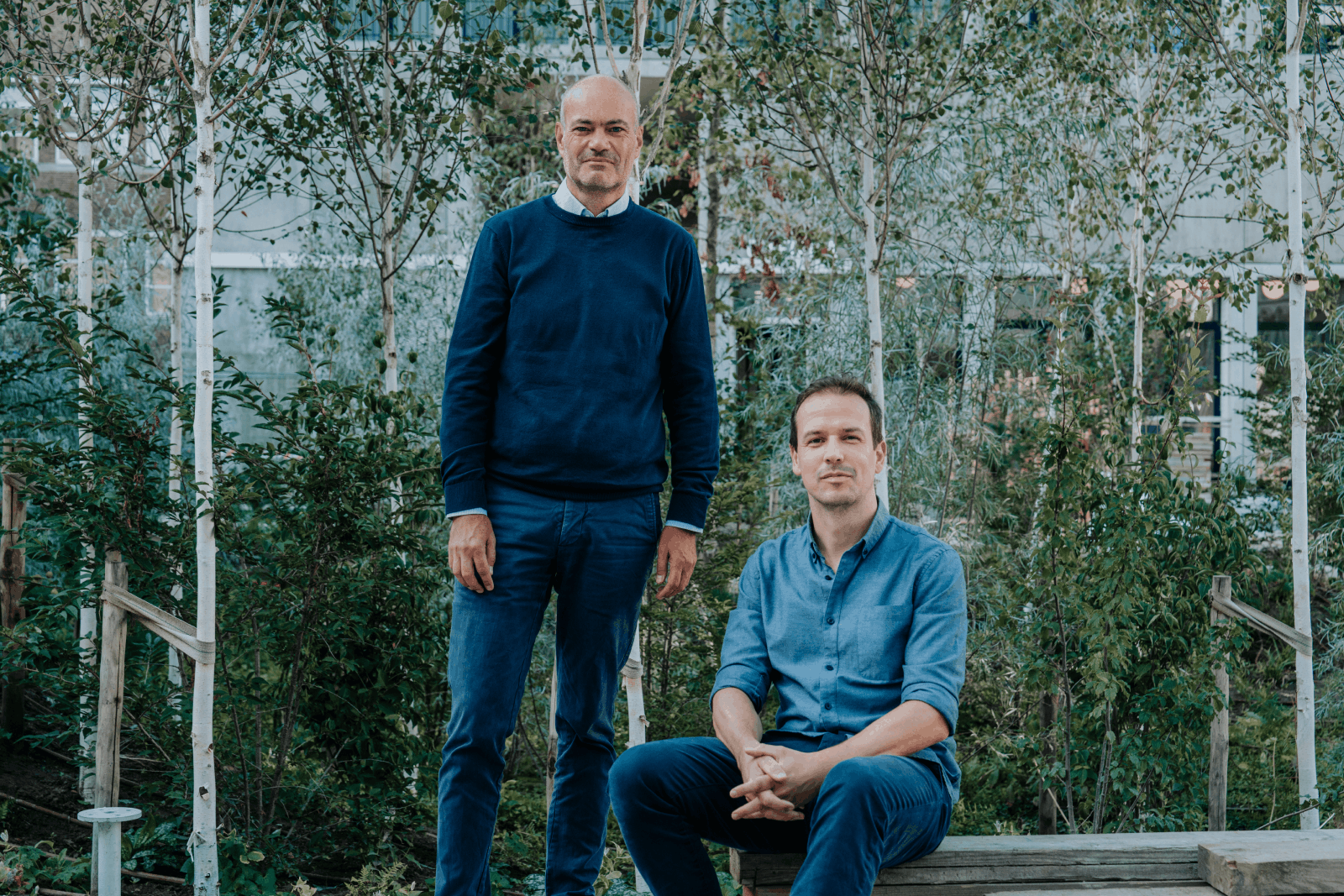
Tristan Verleyen joins the conversation. The policy advisor for the Campus and Buildings domain is co-designing the ambitious project. “Take Campus Ardoyen, for example, where a new plaza with steps leading down to the pond was recently completed,” Tristan explains. “This infrastructure creates a genuine shift in how the campus is experienced: a place where students, researchers and entrepreneurs meet spontaneously.”
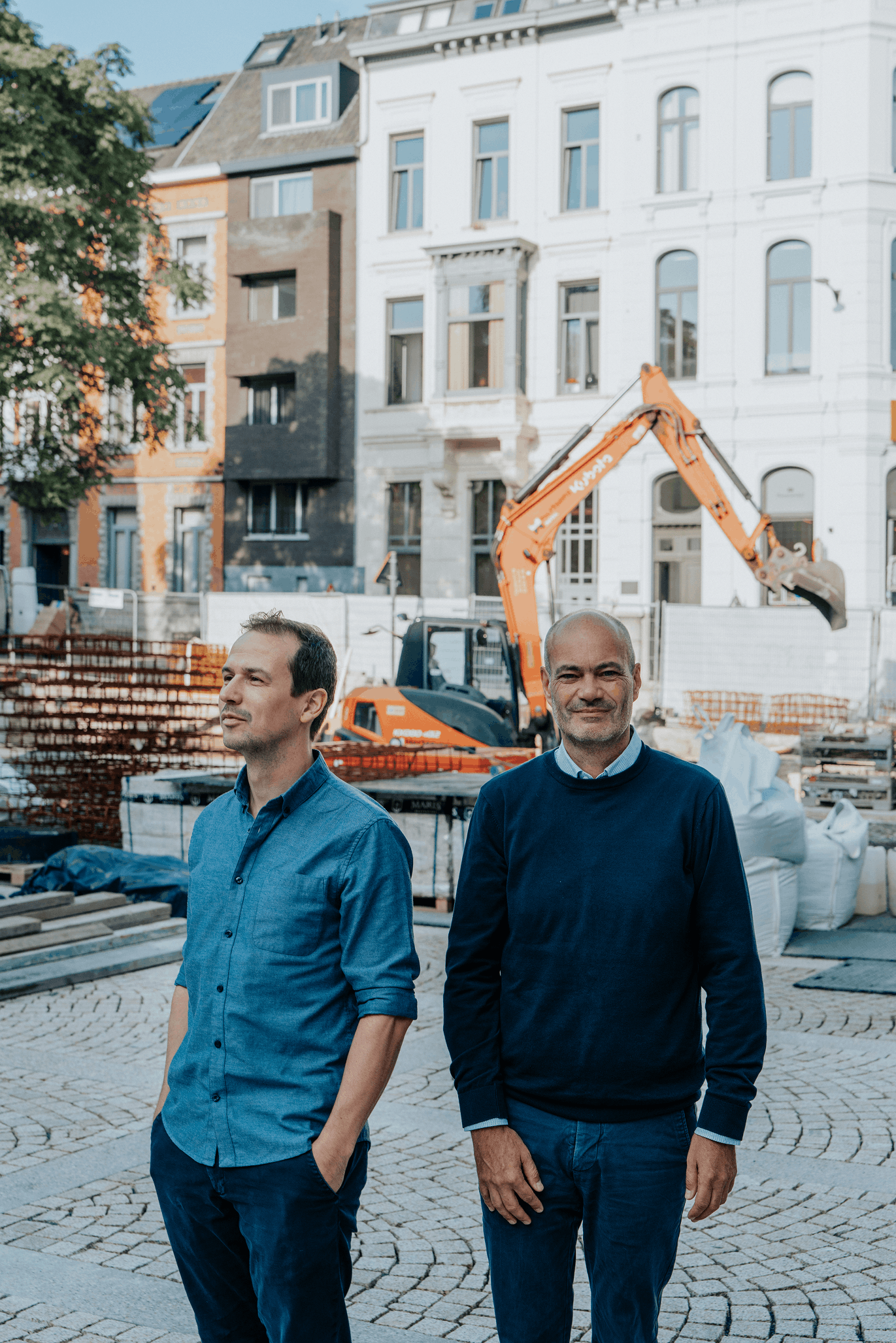
“Buildings are so much more than just the places where teaching and research take place”
What is UGent Verbeeldt 2050?
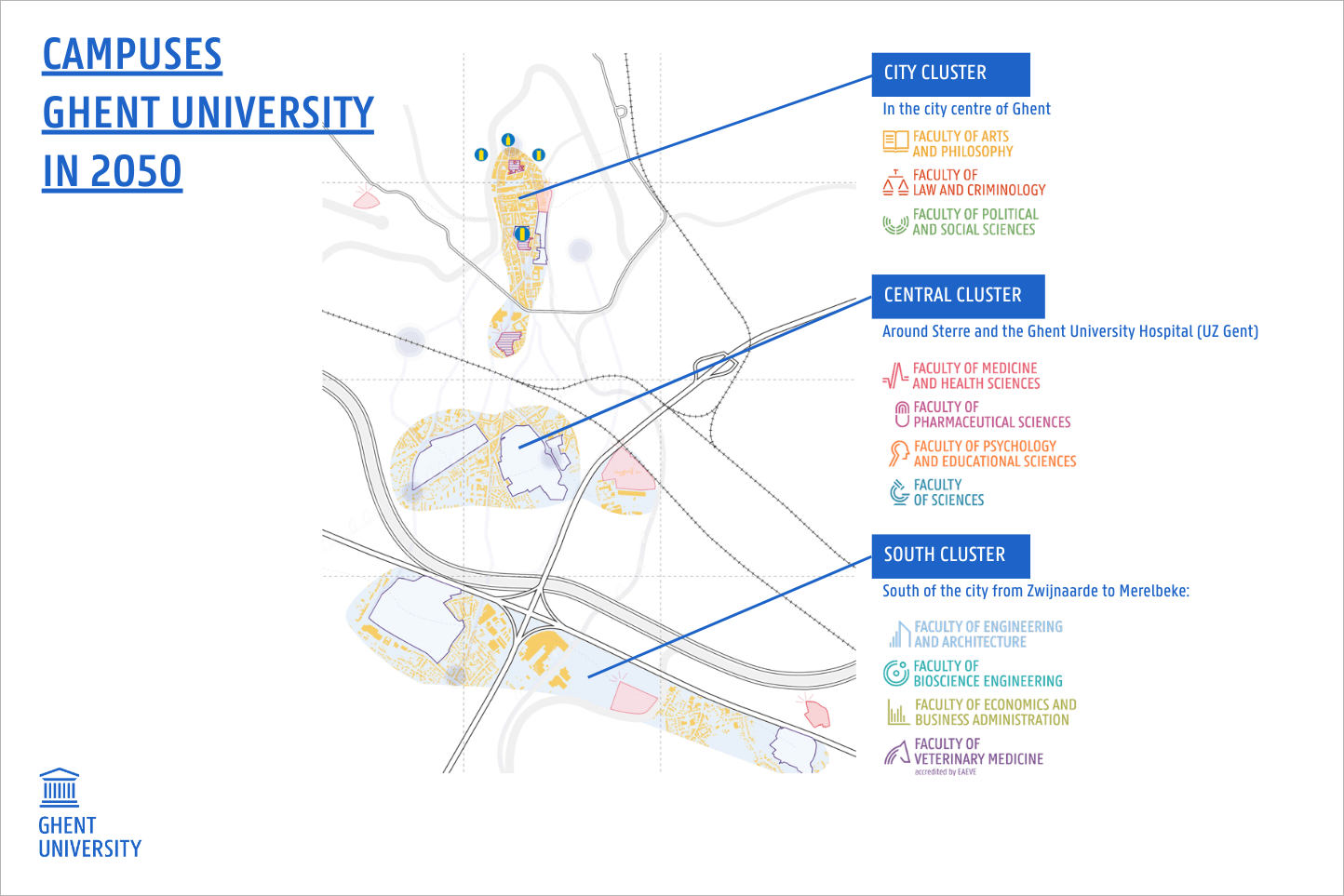
UGent Verbeeldt 2050 is the university’s ambitious master plan to reorganise its fragmented campuses. By 2050, all 11 faculties in Ghent will be grouped in three zones: the City Cluster, Middle Cluster and South Cluster. Through this long-term strategy, UGent aims to modernise its infrastructure and prepare for the challenges of the coming decades.
Flywheel
Tritan notes: “Standing still would mean missing out on enormous opportunities. Our major campus investments act as a flywheel. As they turn into hubs, these investments encourage the government to invest in public infrastructure, such as cycle paths or an express tram line. They attract entrepreneurs looking to establish research partnerships with UGent, while businesses, hotels, pubs, restaurants and student accommodation spring up around the campuses.”
Jeroen adds: “That’s why the three clusters won’t become isolated islands. Ghent is a growing city. Our plan will actively drive urban development, including in the Middle and South Clusters, allowing the vibrant dynamics of the university to spread more evenly across Ghent.”
Status quo is not an option
“Having 21 campuses scattered across Ghent is inefficient on many levels,” Jeroen explains. “Furthermore, some buildings are gradually reaching the end of their lifespan.”
The UGent Verbeeldt 2050 master plan requires a historic investment of €2.35 billion. “Our own resources are insufficient and the government funds only a ridiculously small portion,” Jeroen says firmly. “Alternative financing is necessary and the coming year will be decisive. We will be talking to banks, real estate companies and other partners to make the numbers add up.”
For the first time in its 200-year history, the university will need to take on external debt. But doing nothing is not an option. Tristan says: “A large share of our buildings are 40 to 50 years old. It’s a rule of thumb in real estate that operating costs rise exponentially from that point onward.” Jeroen agrees: “Maintaining the status quo would be equally expensive. People sometimes forget that staying in an existing building comes with significant costs, sometimes even more than moving or a new build.”
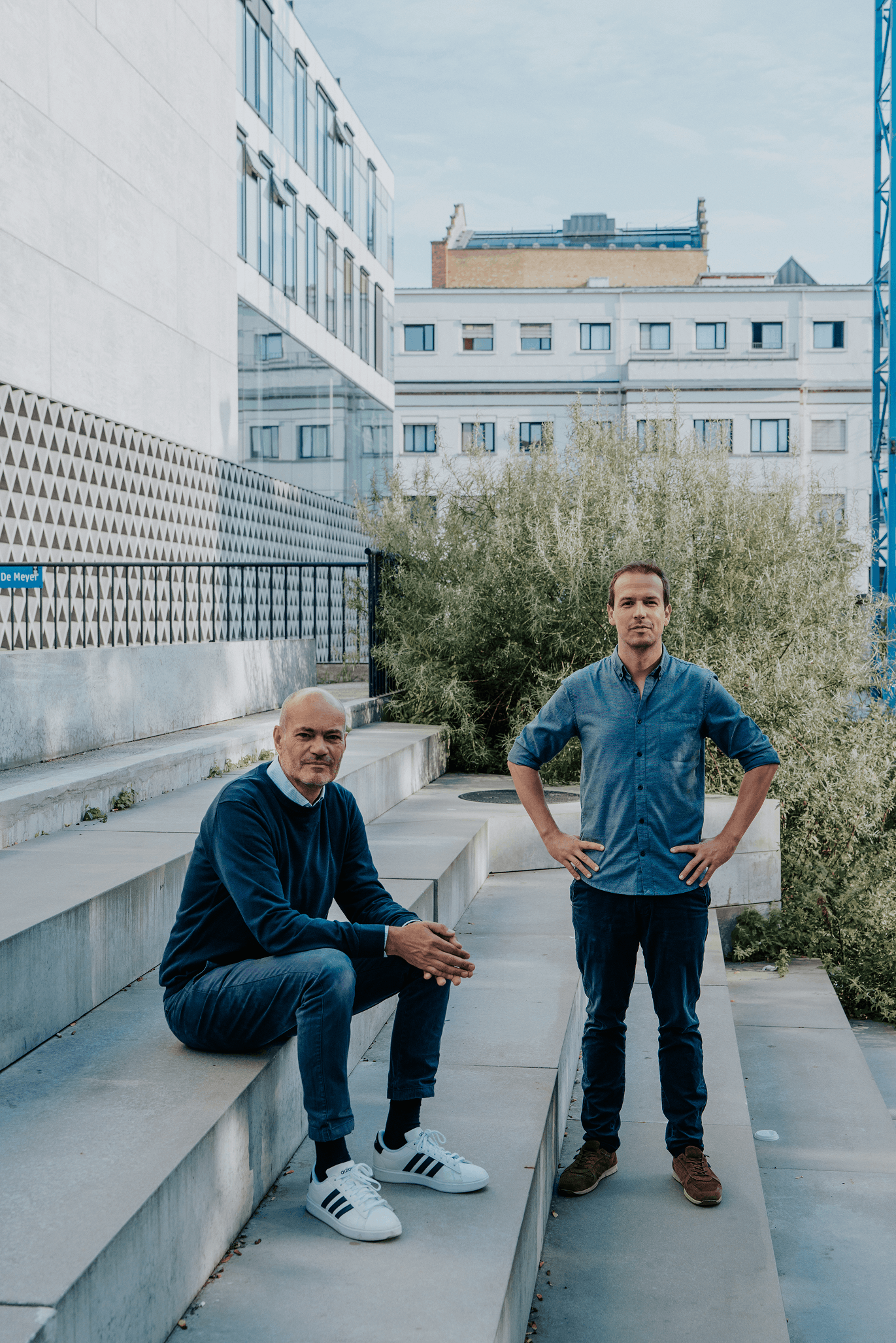
“Maintaining the status quo would be equally expensive. People sometimes forget that staying in an existing building comes with significant costs”
Together is the key
Connectedness is the common thread throughout the project: between faculties, between generations of buildings, and between the university and the city of Ghent.
The master plan places particular emphasis on the flexible sharing of spaces and facilities across faculties. Beyond efficiency gains, this serves a higher purpose: making social interaction the beating heart of university life. “Bringing people together physically fosters dialogue, knowledge development and knowledge sharing,” Jeroen says. “We resolutely refuse to become a ‘Netflix university’ that can only be attended remotely. ‘Together’ is the keyword for this entire project.”
This connection extends beyond individual faculties. Shared campuses lead to unexpected encounters: a philosophy student discovering the law library, or an economics student learning about the latest applications in biotechnology. “These contrasts and diversity are exactly why this is a fantastic university,” Jeroen says.
With the master plan now in place, implementation on the ground begins this coming year. A key symbolic project is Building S11 on Campus De Sterre. “It took 3.5 years to secure all the permits but now building can finally start,” says a relieved Tristan. Alongside a new square and access road, new cycling infrastructure will also be developed, including a cycle bridge connecting Campus De Sterre and Campus Ardoyen.
Tristan and Jeroen emphasise that the project is not just about brick and mortar, but about people’s well-being. Tristan summarises: “It’s about basic needs: a green environment with pleasant meeting places where food and drink are also available. Above all, great teaching and great research deserve great infrastructure. That is what makes students and staff truly feel at home here.”
What tip would you give the UGent community for the upcoming academic year?
Tristan Verleyen: “Go explore our campuses. A brand-new building gives you a taste of our bright future. The renovated inner courtyard at Plateau-Rozier is a personal favourite.”
Jeroen Vanden Berghe: “At UGent, everyone is connected in one way or another. Whether you’re a lecturer, a caretaker or an accounts clerk, you directly contribute to the overall success story of this university. That motivates me to give it my all every single day.”
Read also
From the Ecuadorian Amazon to Ghent: Dayana and Thomas push boundaries
Master's student Dayana Garzón swapped the Ecuadorian Amazon for Ghent University (UGent). Here, she turns her passion for sustainability into concrete solutions under the guidance of Professor Thomas Hermans. “With basic knowledge of land and water use, you can save lives.”

How Campus Kortrijk Connects People and Technology
UGent Campus Kortrijk is gearing up for an academic year packed with creative ideas, sustainable innovation, and warm encounters. A joint interview on inclusive design and the power of diversity: “Cultural differences can actually bring people closer together.”

Italian researchers Leonardo and ‘buddy’ Victor are pursuing their PhD at Ghent University: "Belgium is more relaxed"
Moving to another country for your job is a big step, but two researchers from Italy quickly found their footing in Ghent. “I love your red bricks.”

Gentrepreneurs on the buzz of entrepreneurship: “If I can help students, I’ll consider the year a success”
Thinking of starting a business as a student? Emilia De Graeve and Hannes Van Cauwenberghe would recommend it to anyone. Emilia, a psychology master’s student and co-founder of Blokmap, and Hannes, an alumnus of Ghent University and founder of several companies, take a moment to reflect on their lives as Gentrepreneurs. “Ghent University only makes your ideas more outlandish.”
