In short
- Women experience physical complaints more often, but receive fewer diagnoses than men.
- Aranka Ballering is researching this gender gap in healthcare and the stigma surrounding persistent physical complaints.
- She advocates for greater awareness of diversity in the medical world.
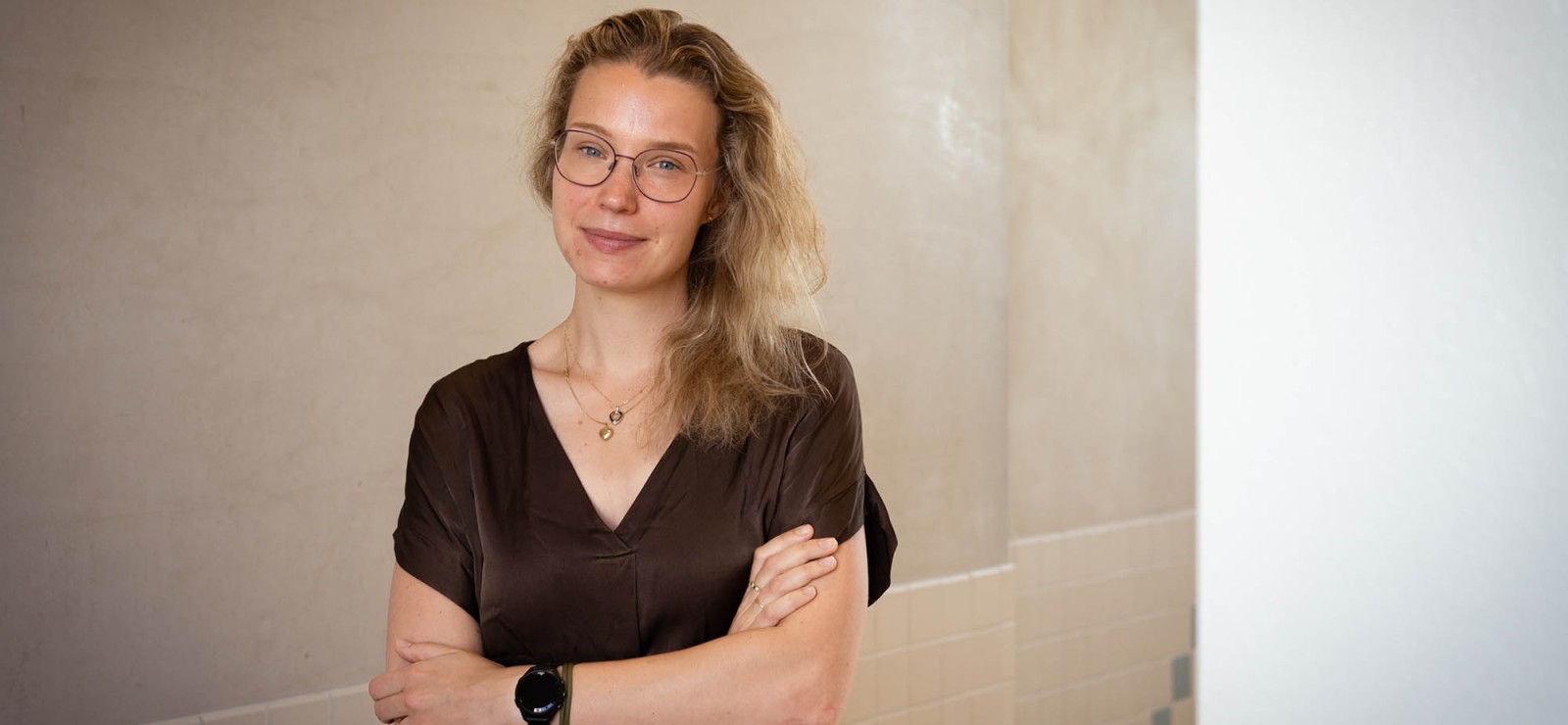
From scientific research to medical treatments, for decades men have been the focus of the medical world. Does that mean women receive poorer care as a result? Health scientist Aranka Ballering investigates. ‘Not every difference is inequality, but women do appear to be diagnosed less often than men.’
Headaches, fatigue, abdominal complaints, dizziness. These vague but common physical complaints are the focus of Aranka's research. ‘Everyone experiences them from time to time,’ says Aranka, ‘but for some people, they don't go away on their own. And what do we find? These types of complaints are more serious in women, but when they seek help, they are more likely than men to return from the doctor empty-handed.’
Aranka is investigating the gender gap in primary care. She conducted research at the University Medical Centre Groningen in the Netherlands for many years and has been continuing her research at the Department of Sociology at Ghent University since the 2024-2025 academic year. In her research, she combines biomedical knowledge with sociological insights. Because, she says, the differences between men and women are not only in the body, but also in how we view health, and men and women.
More visits to the doctor, fewer diagnoses
Only three percent of people who experience a new physical complaint visit their GP within six weeks. And of that small group, most are women. ‘Women report more physical complaints, more serious complaints, and they also last longer,’ Aranka explains. ‘But when they do visit their GP, they receive fewer physical examinations, less medical imaging, fewer referrals to the hospital and fewer diagnoses.’
Nevertheless, Aranka does not want to polarise the issue. ‘I don't think GPs are doing a bad job. On the contrary, they know their patients very well. Sometimes it is also a conscious decision not to refer women, because it simply yields fewer results. In that case, you could say that this is gender-sensitive behaviour.’
A system built on men
It is more likely, Aranka adds, that the diagnostics themselves are not entirely suitable for women. "If your body reacts differently or shows different symptoms, and no research has ever been done on that, then you won't find anything. And then you don't know if you've missed something. We call chest pain and a tingling left arm the “typical” symptoms of a heart attack. But that's mainly typical for men. Women with heart failure may also experience jaw pain, dizziness or pain between the shoulder blades, for example. Moreover, the cause of heart failure in women may differ from that in men."
Aranka is cautious with words such as “inequality” or “discrimination”. ‘Not every difference is inequality,’ she says. ‘I want to understand the system, not point fingers. Because this is not about unwillingness. No GP wakes up in the morning thinking, “Today I'm going to treat women worse”. But the system we work in has historically been built on men as the norm. That has consequences.’
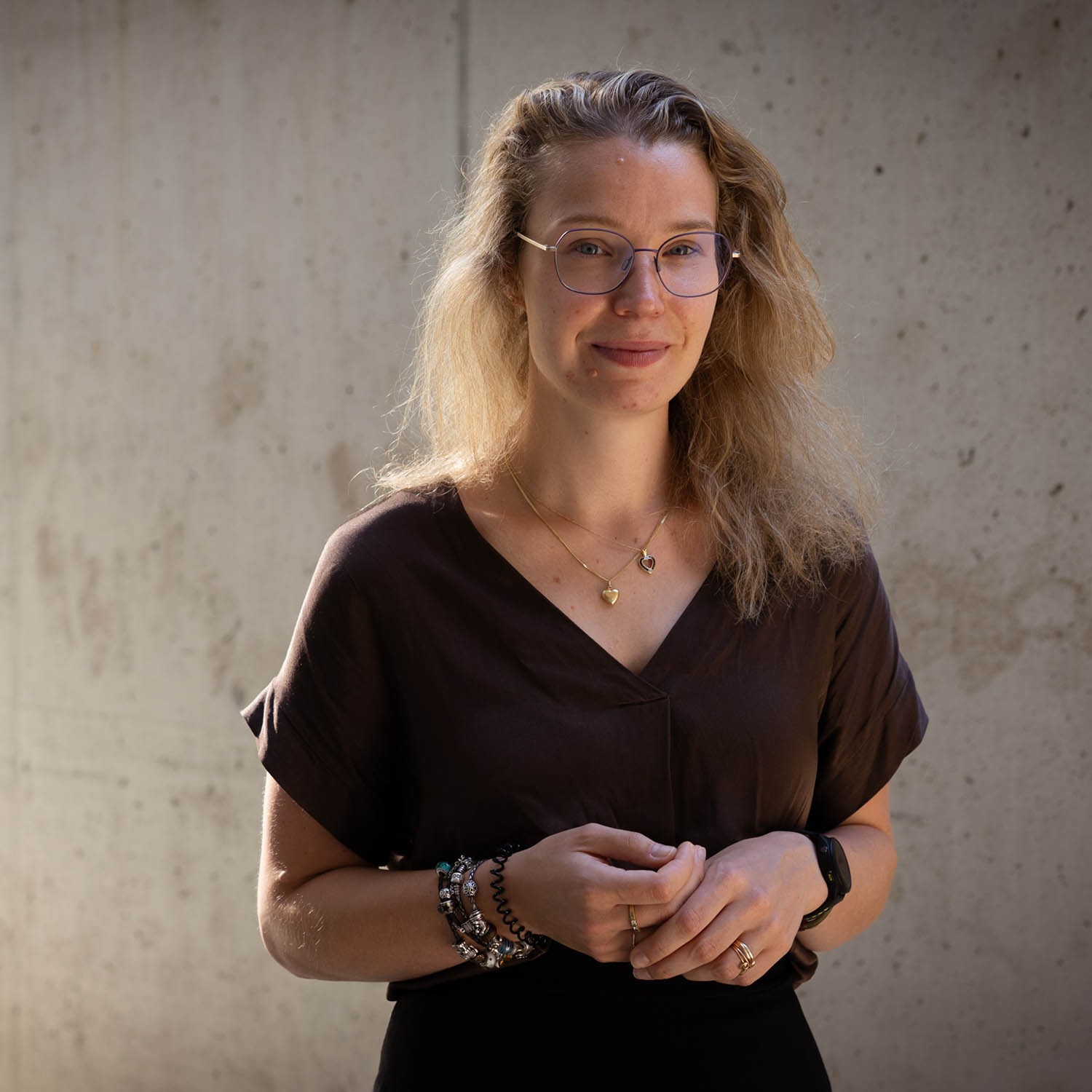
Aranka: "Not every difference is inequality. I want to understand the system, not point fingers. Because this is not about unwillingness."
Research, education and awareness
So how can things be done differently? Aranka sees three levers: more research into how complaints and illnesses manifest themselves in women, more attention to gender in medical training, and greater awareness among healthcare providers.
‘For individual GPs, it starts with the realisation that gender and sex play a role. GPs don't just see the patient as a woman with chest pain. They also know her family situation, her work, her caretaking role. That broader context is so important.’ It would also be good if medical training paid more attention to diversity, Aranka adds. ‘Beyond gender, too. Theoretical or practical training, migration background, these are all factors that determine how someone experiences health.’
From stigma to recognition
Since the beginning of this academic year, Aranka has been expanding her research at Ghent University. She has temporarily left the hospital in Groningen to join the Sociology department in order to better understand the social impact of illness. ‘I want to know: what do people think about persistent physical complaints? How does that affect a patient's behaviour when seeking help? Do they still go to the doctor? Complaints such as chronic fatigue or fibromyalgia are often invisible and are quickly dismissed as “all in the head”. But they are real, and that stigma causes a lot of suffering.’
It's a long road, she acknowledges, but things are changing. "When I started, my research was sometimes looked down upon. But gradually, there has been more attention for gender and sex in research. It is becoming more important for funding, and medical scientific journals explicitly ask: how do you take gender into account in your study? There is also more attention for it in the media. There is still a lot of research to be done, but we are on the right track."
Aranka Ballering has been nominated for the title of New Scientist Young Scientific Talent 2025. This award aims to highlight the research of young scientists in Flanders and the Netherlands. From 21 August to 8 September, you can help decide who deserves this title.
Aranka Ballering is a health scientist and researcher affiliated with the Department of Sociology at Ghent University. She obtained her PhD at the University Medical Centre Groningen on gender differences in common physical complaints and is expanding her research on gender-sensitive care in primary care. Her work combines biomedical knowledge with sociological insights, with the aim of achieving fair and personalised medicine.
Read also
Researchers uncover new mechanism behind hereditary excessive sweating
Overmatig zweten lijkt een banaal kwaaltje, maar dat is het allerminst. Voor miljoenen mensen wereldwijd heeft hyperhidrose een grote impact op hun levenskwaliteit. Nieuw onderzoek werpt een compleet nieuw licht op de aandoening.

100 kilometres for Grandma: how student Kaat is supporting the fight against Parkinson’s
Ghent University veterinary medicine student Kaat De Haeck (26) walked 100 kilometres to support the Parkinson’s Research Fund. By taking part in the Dodentocht, a 100-kilometre walking challenge, she raised €2,000.

Does AI make our brains smarter or lazier?
We asked neurologist Kristl Vonck how she views the impact of AI on our brains. What happens to our brain when we systematically outsource thinking to an algorithm?

Five (realistic) ways to move more in 2026
January often starts with good intentions… but those plans can be quickly abandoned. To exercise more is always high up everyone’s list, but there’s often a gap between wanting to do it and actually doing it. So how do you bridge that gap?
