
War no longer feels as distant for many Europeans. Geopolitical tensions and a renewed arms race have pushed the issue high up the agenda. But does that mean we really need to prepare for war? We put the question to Michelle Haas, a doctoral researcher at Ghent University and defence specialist and author of the book Komt er oorlog? en 33 andere vragen over defensie (Will There Be a War? And 33 Other Questions About Defence).
In short
- - The world has become more uncertain, but a direct war affecting Belgium remains unlikely.
- There are, however, other threats to take into account: cyberattacks, disinformation and disruptions to essential services.
- - According to Michelle Haas, the key is to build resilience, both at government level and among citizens.
Should we be preparing for war?
“That is without doubt the question I get asked most often today. The short answer is that the risk of a conflict directly affecting Belgium is higher than it has been in recent decades. But that needs to be put into perspective. We are not going to see Russian tanks rolling through Ghent. But we may face other forms of conflict. Think of cyberattacks, disinformation campaigns, or disruptions to energy supplies and logistics. Such threats are only likely to increase.”
Many people worry about a third world war. Is that fear justified?
“That fear is very real, especially among young people. The world has undoubtedly become more uncertain, but a conventional war on our territory remains highly unlikely. What people need is clarity: an understanding of what is happening, what they can do, and where to turn for reliable information. When people better understand the situation, fear tends to ease.”
How important is disinformation in all of this?
“Enormously important. We often underestimate how much information shapes our perception of reality. Disinformation is designed to create doubt and erode trust, making societies more vulnerable. That is why it is crucial for people to remain critical of what they read and share.”
Geopolitical tensions are causing a great deal of concern.
"That concern is understandable. We are witnessing a shift in the global balance of power. In political science, this is referred to as the Thucydides Trap: when an established power, such as the United States, is challenged by a rising power like China, the risk of miscalculation increases. Add an aggressive Russia to the picture and you get a highly unpredictable situation. War is not inevitable, but we do need to be realistic: conflicts can arise through escalation or strategic misjudgement. That uncertainty fuels fear.”
How could such a conflict affect us?
“In very concrete ways. Supply chains could be disrupted, digital systems may fail, and critical infrastructure could be targeted. These are realistic scenarios. That is why it is wise for citizens to maintain a certain level of preparedness. Think of a small emergency stock at home, but also digital resilience. The same applies to companies, which should consider backup supplies and business continuity plans.”
Is Belgium sufficiently prepared?
“First and foremost, absolute security does not exist. But we have created unnecessary vulnerabilities, notably by underinvesting in defence for many years. This ranges from air defence to logistics and cyber capabilities. Today, Belgium is reaching its limits. Investing more is mainly about getting the fundamentals back in order, also out of solidarity with our allies.”
Have we been naive as a society?
“For a long time, we lived in a relatively stable world and shaped our policies accordingly. That made sense at the time. But the context has changed, so we need to adapt. That does not mean we were naive. It means we now have to act more quickly.”

“That concern is understandable. War is not inevitable, but we do need to be realistic: conflicts can arise through escalation or strategic misjudgement. That uncertainty fuels fear."
Is diplomacy still a credible alternative solution?
“Diplomacy remains absolutely essential, but it is not sufficient in every situation. Some actors are simply not willing to negotiate. In such cases, other instruments are needed as well. It is not a choice between diplomacy and defence: the two reinforce eachother. Those in a stronger position are often better able to negotiate.”
Should compulsory military service be reintroduced?
“I do not think that is necessary. Conscription was abolished after the Cold War, when armies became smaller and more professional. Today, we are once again in a different context, but that does not mean we should simply return to a compulsory system. The army also lacks the capacity for that. Initiatives such as voluntary military service or a larger reserve force make more sense. As a reservist, you can take on a wide range of roles: from a cook on a ship to a psychologist, physiotherapist, analyst or spokesperson. In that way, you contribute your own expertise to Defence in your own way.”
For those who do not want to, or cannot, become reservists: what can citizens do?
“We need to stand in solidarity with one another. For me, it starts with building self-reliance and resilience by regularly pushing your own limits. That may sound like ‘everyone for themselves’, but the more self-reliant people are, the more the government can focus on vulnerable groups. Being well prepared takes pressure off the system when it is under severe strain. That is the essence of societal resilience.”

Michelle Haas is a doctoral researcher at the Ghent Institute for International and European Studies (GIES) at Ghent University. She previously worked as a policy adviser on foreign affairs and defence. She recently published the book ‘Komt er oorlog? En 33 andere vragen over defensie’ (Will There Be a War? And 33 Other Questions About Defence). Michelle Haas is also a reservist in the Belgian armed forces, “even though, as a young person, I wanted nothing to do with the military.”
Read also
Is it okay to tune out the news about war?
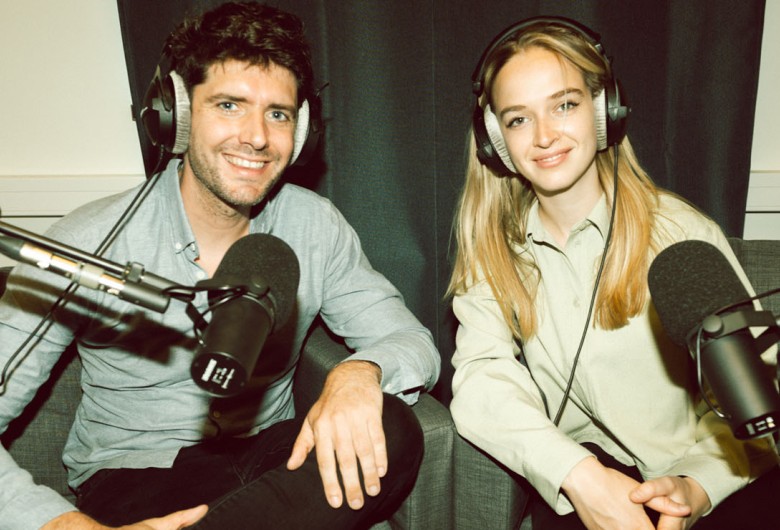
“Should we panic or can we keep a cool head?” With that question, defence experts Michelle Haas and Tim Haesebrouck from Ghent University open every episode of their podcast De Paniekzaaiers (“The Panicmongers”). In a world where global politics seems upside down, they add some much-needed nuance.
Read also
Is it okay to tune out the news about war?
“Should we panic or can we keep a cool head?” With that question, defence experts Michelle Haas and Tim Haesebrouck from Ghent University open every episode of their podcast De Paniekzaaiers (“The Panicmongers”). In a world where global politics seems upside down, they add some much-needed nuance.

What does 2025 have in store for Europe in terms of war and peace?
2024 was a turbulent year, with ongoing military conflicts and geopolitical tensions. And judging by the news reports, 2025 is also shaping up to be a tumultuous year. So what is the status of our security in Europe? Should we be preparing for war?

"It is very important for European security and stability that we stop Russia"
In 2024, will we find a solution to the world’s many conflicts or can we expect more wars? And what role should Europe play? We put these questions to international politics expert Sven Biscop.
