
Excessive sweating may sound like a minor complaint, but it is anything but. For millions of people worldwide, hyperhidrosis has a profound impact on daily life and wellbeing. New research led by Professor Frank Bosmans of Ghent University and Vrije Universiteit Brussel sheds new light on the condition. In one hereditary form of hyperhidrosis, the problem appears to lie not only in the sweat glands themselves, but also in the nerves that control them. The discovery could pave the way for more targeted treatments.
In short
- Hyperhidrosis is a condition that causes excessive sweating. It is estimated to affect between 2 and 5 per cent of the world’s population.
- The research shows that, in a genetically defined group of patients, disruption of the autonomic nervous system can overstimulate the sweat glands.
- In the longer term, the findings could open up new avenues for more targeted treatments. Particularly important is the recognition that hyperhidrosis can, in some cases, have a neurological basis.
Much more than ‘a bit of sweating’
“Many people think: it’s only sweating,” says Professor Frank Bosmans. “But for patients, the impact can be enormous. I know people who no longer leave the house because they feel so ashamed. They have to change their clothes several times a day, their hands are constantly wet, and they can literally leave pools of sweat on their chairs. Some become completely socially isolated.”
An estimated 2 to 5 per cent of the world’s population has hyperhidrosis, although Bosmans suspects the true figure may be higher.
“Many people never consult a doctor because they think it is somehow their own fault, or that it is a trivial complaint they simply have to learn to live with.”
A decade-long search for the cause
The research behind these potentially life-changing insights is the result of a long-standing collaboration between Ghent University, Vrije Universiteit Brussel and Johns Hopkins University in the United States.
Bosmans, who originally trained as a pharmacist, lived and worked in the United States for thirteen years. His co-author runs a specialist hyperhidrosis clinic there. Since the study began, the researchers have followed around 8,000 patients.
“This discovery has been more than ten years in the making,” says Bosmans.
“Our study shows that, in these patients, it is primarily the neural control of the sweat glands that is disrupted. The autonomic nervous system effectively sends signals that are too strong. In the hereditary form we studied, a genetic change in the Nav1.8 ion channel increases the activity of the nerves that control the sweat glands.”
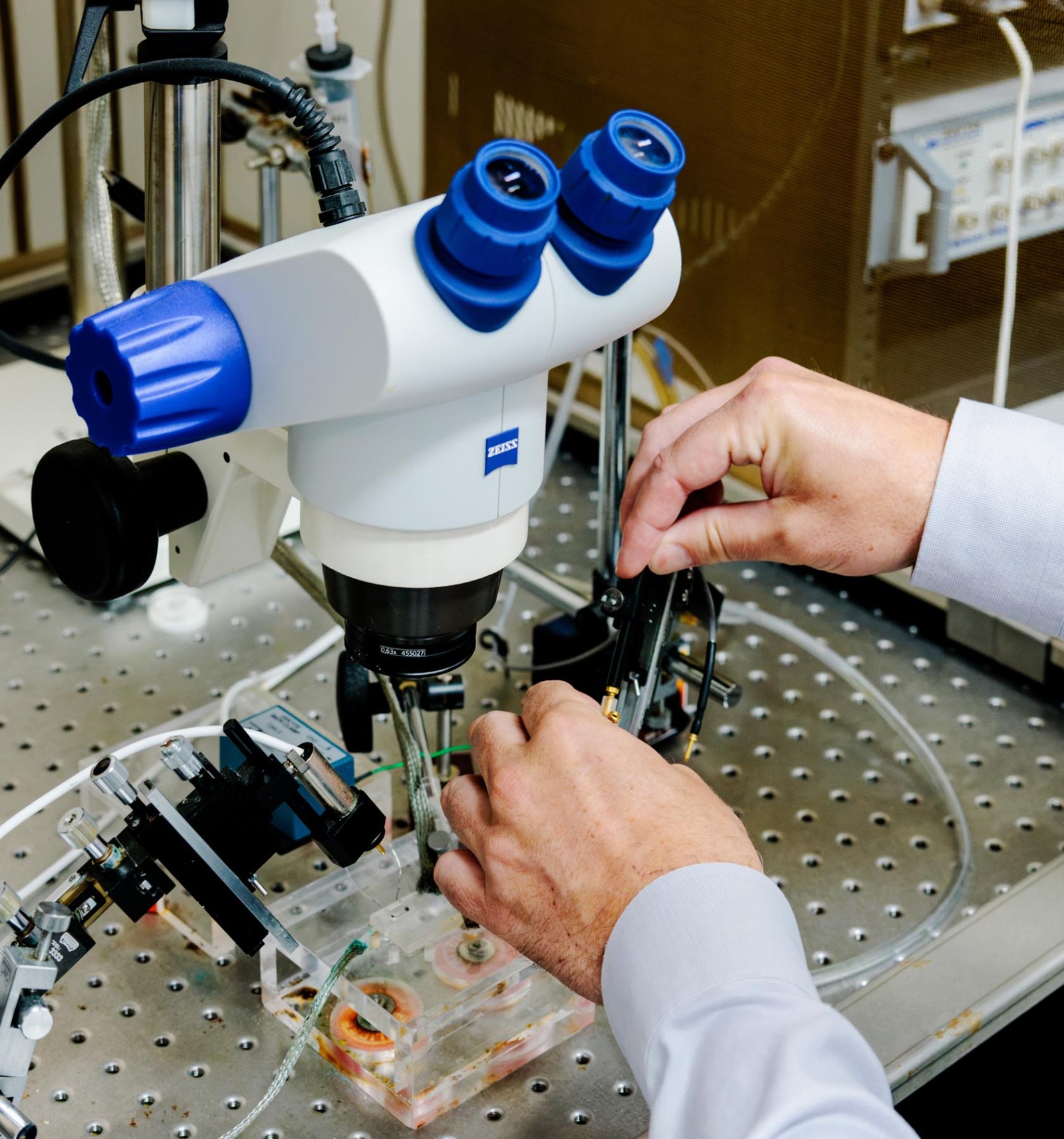
“Our study shows that, in these patients, it is primarily the neural control of the sweat glands that is disrupted."
This genetic mutation directly explains why patients often experience other health problems.
“We regularly see the same dysregulation associated with heart problems, gastrointestinal symptoms and other conditions. We are now investigating whether related neural mechanisms may also play a role in some of these complaints.”
From babies to driven high achievers
In a substantial proportion of patients, hyperhidrosis also affects other members of the family. The condition can also appear at a very early age.
“I have even followed babies who already showed clear signs of hyperhidrosis,” says Bosmans.
In other patients, symptoms appear later in life or become markedly worse at particular times. Hormonal changes, including puberty, pregnancy and the period after childbirth, as well as infections and other forms of physical stress, seem to trigger or intensify symptoms in some people.
“There is probably not always a single cause,” Bosmans explains. “Someone may have an inherited susceptibility that causes relatively few symptoms for a long time, until an additional factor pushes the autonomic nervous system further out of balance. We now want to understand more clearly why the condition develops early in some patients and later in others.”
From managing symptoms to targeted treatment
The discovery completely changes how we view current treatments. Current options are usually aimed at controlling symptoms locally. They include clinical-strength antiperspirants, botulinum toxin injections and treatments that use a mild electrical current.
“These treatments can be effective, but they do not work equally well for everyone and generally do not act directly on the underlying neural mechanism,” says Bosmans.
There is not yet a targeted treatment that corrects the effect of the mutation. During the study, however, professor Bosmans and his colleagues found that certain combinations of existing medicines, originally developed for other conditions, were also effective.
“In a number of patients, we observed that existing medicines could reduce both sweating and some of the additional symptoms. These findings still need to be investigated systematically in clinical trials. This is encouraging, because we hope that one day a single treatment will address not only the hyperhidrosis, but also some of the potentially related conditions.”
The message to people who recognise these symptoms? “Do not simply put up with them. Discuss severe sweating with your GP or dermatologist. They can assess whether further diagnostic tests are appropriate and talk you through the treatments that are already available. For many patients, those treatments can make a major difference today.”
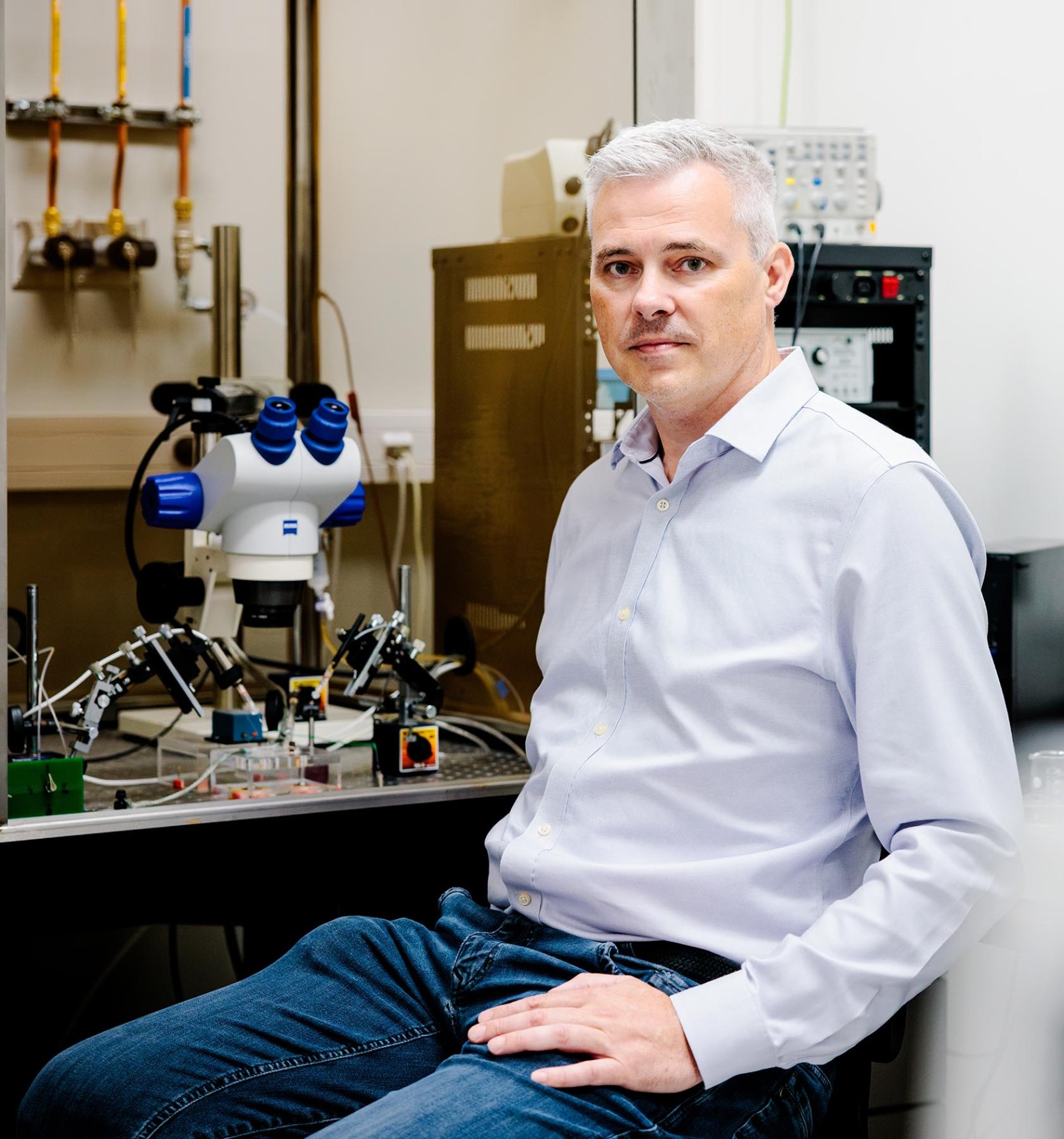
“Do not simply put up with the symptoms. Discuss severe sweating with your GP or dermatologist."
The research also offers hope for entirely new approaches: “In a genetic mouse model, we were able to suppress the excessive sweating completely,” Bosmans says. “We still need to investigate whether the same approach would be safe and effective in humans. But if it can be developed further, it could eventually become relevant for patients in whom this particular neural mechanism is involved.”
Breaking the cycle of social isolation
For Bosmans, one of the most important outcomes of the research is the validation it offers patients.
“Hyperhidrosis is not merely a cosmetic problem. In some patients, it is caused by a demonstrable disruption in the way the nerves control the sweat glands.”
The patients’ stories make the impact of the condition, and of successful treatment, clear.
“I recently had a video call with a young woman whom we had treated successfully. Her mother joined the call in tears because she wanted to thank us personally. After only a few weeks of treatment, her daughter had left the house that day for the first time in twenty years. That is why we do this work.”

Professor Frank Bosmans is a neuroscientist and senior lecturer at the Faculty of Medicine and Health Sciences at Ghent University. He is also a professor at the Faculty of Medicine and Pharmacy at Vrije Universiteit Brussel. He lived and worked in the United States for thirteen years, including six years at Johns Hopkins University. His research focuses on how ion channels function in the nervous system and the role they play in neurological disorders.
Read also
Does AI make our brains smarter or lazier?
We asked neurologist Kristl Vonck how she views the impact of AI on our brains. What happens to our brain when we systematically outsource thinking to an algorithm?

Five (realistic) ways to move more in 2026
January often starts with good intentions… but those plans can be quickly abandoned. To exercise more is always high up everyone’s list, but there’s often a gap between wanting to do it and actually doing it. So how do you bridge that gap?

Is a stool transplant a potential treatment for Parkinson’s?
A recent study into Parkinson’s disease has shown that a stool transplant may constitute a new and valuable treatment of the disease. “It offers a potentially safe, effective and cost-efficient way of alleviating the symptoms and improving the quality of life of millions. A 'bacterial pill' might replace the stool transplant in the future. But more research is needed.”

Ignaas Devisch has been stimulating our thinking for years (and is now receiving recognition for it)
Twenty years ago, he was ridiculed as a scientist when he tried to communicate with the general public. Now, Ignaas Devisch is receiving the Science Communication Career Award for it. "It's wonderful recognition," says the medical philosopher. "Although communicating about science also involves learning to listen well."
